

When you’re taking blood pressure medication, what you eat can be just as important as the pill in your hand. Many people don’t realize that high-potassium foods can interact with common prescriptions-sometimes helping, sometimes harming. This isn’t about avoiding healthy foods. It’s about understanding how your body reacts when potassium meets certain drugs. Too little potassium can raise blood pressure. Too much, especially with the wrong meds, can trigger dangerous heart rhythms. The line between help and harm is thin, and most people are flying blind.
Why Potassium Matters for Blood Pressure
Potassium isn’t just another mineral. It’s a natural counterbalance to sodium. When you eat more potassium, your kidneys flush out extra salt and water. That lowers blood pressure. Studies show eating enough potassium can drop systolic pressure by over 5 mm Hg and diastolic by 3 mm Hg. That’s about the same as taking a low-dose pill. The American Heart Association recommends 3,500 to 5,000 mg daily. But the average American gets only 2,400 mg. That’s not enough.Good sources? Bananas (422 mg), sweet potatoes (542 mg), spinach (839 mg per cup cooked), salmon (534 mg), and avocados (975 mg). Coconut water? 600 mg per cup. These aren’t fancy superfoods-they’re everyday items. The problem isn’t getting enough potassium. It’s getting too much while on certain medications.
Which Blood Pressure Drugs Interact with Potassium?
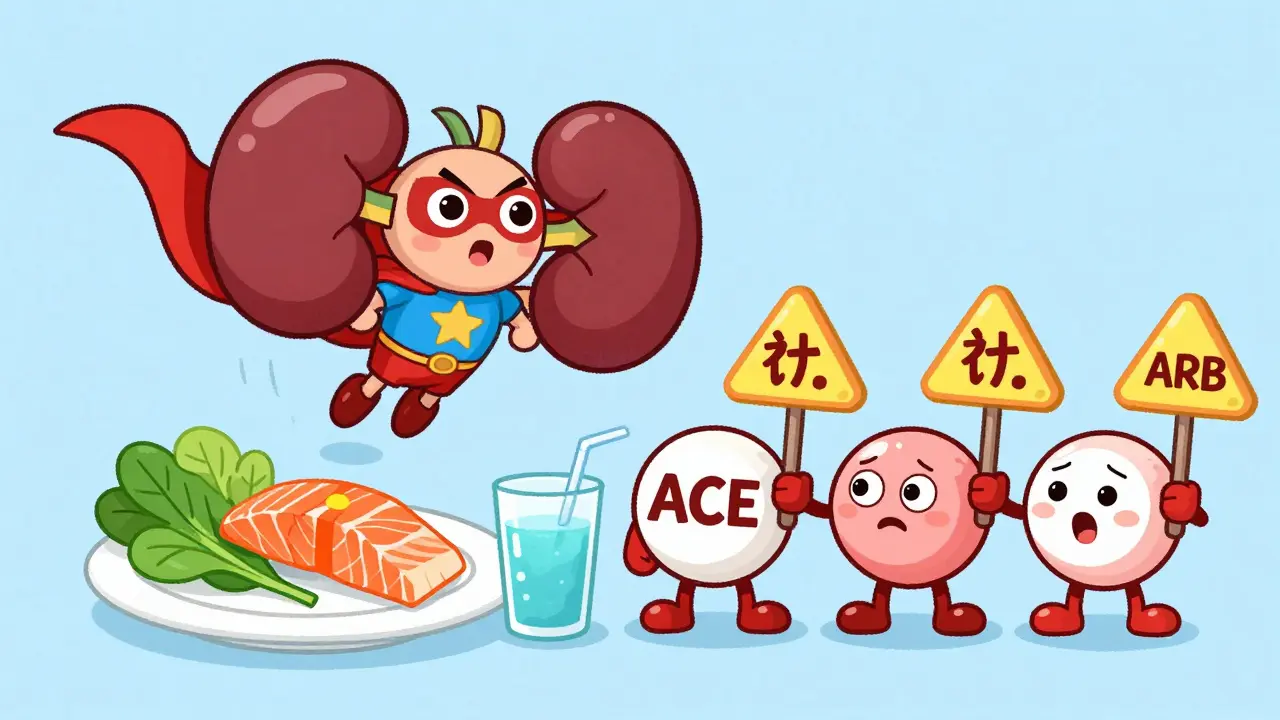
Not all blood pressure meds play nice with potassium. The big three are:- ACE inhibitors (like lisinopril, enalapril)
- ARBs (like losartan, valsartan)
- Potassium-sparing diuretics (like spironolactone, eplerenone)
These drugs work by blocking hormones that cause blood vessels to tighten and kidneys to hold onto salt and water. But they also block potassium from being flushed out. So if you’re eating a lot of potassium-rich foods while on these meds, your body can’t get rid of the extra. That’s when levels climb-sometimes dangerously.
Over 40% of people with high blood pressure are on one of these drugs. That means nearly half the population could be at risk if they don’t know how to balance their diet.
What Happens When Potassium Gets Too High?
Serum potassium above 5.0 mmol/L is considered high. Above 6.0 mmol/L? That’s a medical emergency. Too much potassium can mess with your heart’s electrical signals. Symptoms? Muscle weakness, tingling in hands or feet, irregular heartbeat, chest pain. In severe cases, it can cause cardiac arrest.People with kidney problems are at higher risk. When kidneys can’t filter well (eGFR below 60), potassium builds up fast. One study found 28% of patients with moderate kidney disease developed dangerous potassium levels when eating high-potassium diets. Elderly patients on ACE inhibitors? 11.3% developed hyperkalemia when eating more potassium-rich foods, according to research from the Karolinska Institute.
But here’s the twist: eating potassium from food is far safer than taking supplements. A 2017 study in Kidney International showed that patients on potassium chloride pills had an 11% chance of hyperkalemia. Those eating the same amount from spinach, beans, or potatoes? Almost none. The body regulates food-based potassium better. Supplements flood the system. Food doesn’t.
Real People, Real Mistakes
Online forums are full of stories. On Reddit, someone posted: “I was eating 3 bananas a day on lisinopril. My potassium hit 5.4. I felt like I was going to pass out.” Another said: “My doctor didn’t warn me. I added more spinach to my smoothie. Two weeks later, I was in the ER with a weird heartbeat.”These aren’t rare. A 2023 survey of 872 hypertension patients found 19% had symptoms like muscle cramps or palpitations after increasing potassium intake without medical advice. Seven percent ended up in the hospital.
But there are success stories too. One PatientsLikeMe member tracked their intake with Cronometer and switched from bananas to blueberries after starting spironolactone. Their potassium dropped from 5.4 to 4.8-no side effects, same blood pressure control. Another person lowered their systolic pressure by 8 mm Hg in eight weeks by eating more potassium-rich veggies and cutting back on processed food. All under their doctor’s watch.
How to Eat Smart Without Fear
You don’t need to give up sweet potatoes or salmon. You need a plan.- Get tested. Ask for a serum potassium blood test before and two weeks after changing your diet. Normal range is 3.5-5.0 mmol/L.
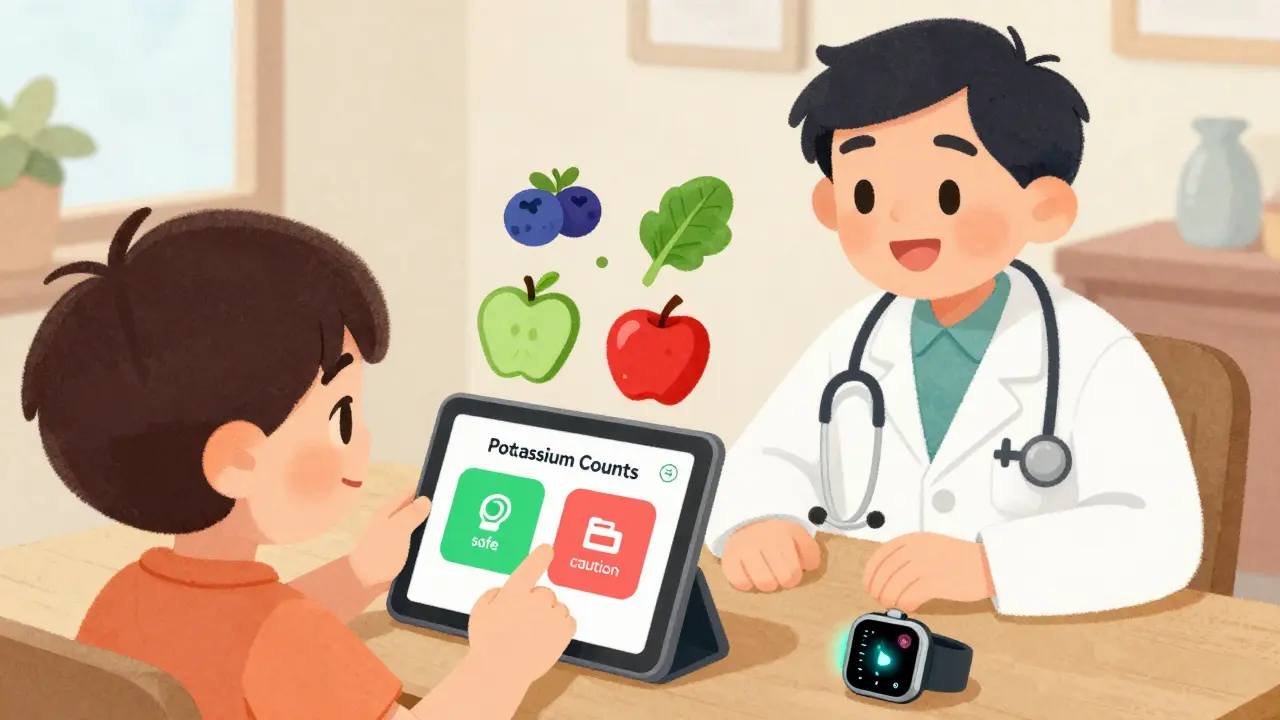
- Track your intake. Use apps like the National Kidney Foundation’s “Potassium Counts.” It’s free and shows potassium in over 1,000 foods.
- Don’t overdo it. One avocado a day is fine. Two? Maybe not. Three bananas? Probably too much if you’re on lisinopril.
- Time your meds. Some doctors suggest taking ACE inhibitors at night, away from big potassium meals, to reduce absorption spikes.
- Know your limits. If you have kidney disease, diabetes, or are over 65, be extra cautious. Your doctor should monitor you every 3-6 months.
Also, avoid salt substitutes labeled “low sodium” unless your doctor says yes. Many contain potassium chloride. One-quarter teaspoon can add 250-700 mg of potassium. That’s like eating a banana in one shot. For someone on spironolactone, that’s risky.
What About Supplements?
Skip them. Unless your doctor specifically prescribes a potassium pill-which is rare-don’t take them. The FDA doesn’t recommend over-the-counter potassium supplements for blood pressure. They’re not regulated. They can spike levels fast. And if you have even mild kidney trouble, they can be deadly.One 2022 study in JAMA Internal Medicine found that CKD patients taking potassium supplements had an 1.8 times higher risk of death if their levels went above 5.0 mmol/L. Food? No such risk. The body handles it slowly, naturally.
What’s New in 2025?
New tools are making this easier. In 2023, the FDA approved patiromer (Veltassa), a medication that binds potassium in the gut. It lets patients eat more potassium-rich foods while staying safe on RAAS inhibitors. Clinical trials showed 89% of users kept potassium in the normal range-compared to 67% without it.And in 2024, Omron is launching a smartwatch that estimates potassium levels through skin sensors. It’s not a replacement for blood tests, but it gives early warnings. The market for these devices is projected to hit $2.1 billion by 2027.
The big study coming up? The POTASSIU-2 trial. It’s tracking 5,200 patients to find personalized potassium targets based on medication type and kidney function. This isn’t one-size-fits-all anymore.
Bottom Line: Balance, Not Fear
High-potassium foods aren’t the enemy. They’re part of the solution for high blood pressure. But when you’re on ACE inhibitors, ARBs, or potassium-sparing diuretics, you need to be smart. Don’t assume “natural” means “safe.” Don’t assume your doctor told you everything. Ask for a potassium test. Track your intake. Know your limits.Most people can safely eat a diet rich in fruits, vegetables, beans, and fish-even while on blood pressure meds. But you need to do it with awareness. The goal isn’t to cut out good food. It’s to eat it wisely. Because when potassium and medication work together, they can do more than lower blood pressure. They can save your life.
Can I still eat bananas if I’m on lisinopril?
Yes, but in moderation. One banana a day is usually fine for most people on lisinopril with normal kidney function. But if you’re eating other high-potassium foods like spinach, sweet potatoes, or avocado daily, you may be pushing your levels too high. Get a blood test to check your potassium. If it’s above 4.8 mmol/L, talk to your doctor about reducing high-potassium foods.
Do all blood pressure medications affect potassium?
No. Only ACE inhibitors, ARBs, and potassium-sparing diuretics significantly raise potassium levels. Other common ones-like calcium channel blockers (amlodipine), beta-blockers (metoprolol), and thiazide diuretics (hydrochlorothiazide)-don’t. In fact, thiazide diuretics can lower potassium. Always check what class your medication belongs to. Your pharmacist can help.
Is it safe to use salt substitutes if I’m on blood pressure meds?
Not without checking. Many salt substitutes replace sodium chloride with potassium chloride. A single teaspoon can contain over 1,000 mg of potassium. If you’re on an ACE inhibitor or spironolactone, that can push your levels into the danger zone. Even if you don’t have kidney disease, it’s risky. Ask your doctor before using them.
How often should I get my potassium checked?
If you’re starting or changing a potassium-rich diet while on an ACE inhibitor, ARB, or potassium-sparing diuretic, get tested at baseline, then again at 2 and 4 weeks. After that, every 3-6 months is standard. If you have kidney disease, diabetes, or are over 65, your doctor may want you tested more often. Don’t wait for symptoms-hyperkalemia often has none until it’s too late.
What are the best low-potassium fruits if I need to cut back?
Blueberries, strawberries, apples, grapes, pineapple, and watermelon are all low in potassium (under 200 mg per serving). Avoid oranges, bananas, kiwi, dried fruit, and melons like cantaloupe. A cup of blueberries has only 114 mg of potassium-great for smoothies. Swap your banana for an apple if you’re on spironolactone. Small changes make a big difference.
Can I stop my blood pressure meds if I eat more potassium?
No. Potassium from food helps lower blood pressure, but it’s not a replacement for medication. Stopping your pills without medical supervision can cause dangerous spikes in blood pressure. Think of potassium as a partner to your meds-not a substitute. Always talk to your doctor before making any changes to your treatment plan.
One banana a day is fine but don't forget spinach and sweet potatoes pile up fast
Of course the FDA approves patiromer just after Big Pharma quietly lobbied for it. You think they care about your potassium levels or just your monthly prescription revenue?
Let me tell you something nobody else will admit - this whole potassium thing is a distraction. They want you afraid of avocados so you keep buying pills. The real enemy? Processed food. The real cure? Fasting. The real danger? The system that tells you what to eat while it profits off your fear. I’ve gone 14 days without potassium-rich food and my BP dropped 12 points. Coincidence? Or is your body just waiting to be trusted?
People think natural means safe but natural can kill you too
I was on lisinopril for years and ate bananas every morning. Never had an issue. My doc checked my levels every 3 months and we adjusted. It’s not about fear it’s about awareness. Don’t let hype scare you out of healthy food.
And yet… the irony is palpable: we are told to consume ‘whole foods,’ yet the moment we do, we are told we are risking cardiac arrest. Who decides what ‘moderation’ means? Is it the physician? The pharmacist? The algorithm that recommends ‘high-potassium smoothie bowls’ on Instagram? We are not patients-we are data points in a pharmacological theater.
My aunt died from hyperkalemia after her doctor told her to eat more spinach because she had high blood pressure. She didn't even know she had kidney disease until it was too late. Why aren't doctors screening everyone before giving dietary advice? This isn't nutrition it's negligence
You people are missing the point. Potassium is not the issue. The issue is that your kidneys are failing because of sugar and processed carbs. Fix the root cause not the symptom. Eat less sugar. Move more. Then worry about bananas. Otherwise you're just rearranging deck chairs on the Titanic
I switched from bananas to blueberries after starting spironolactone. My potassium dropped from 5.4 to 4.8. No symptoms. Still feel great. Small changes matter more than we think.
Just started lisinopril last month and I’m terrified to eat anything green now. But this post actually helped. Thanks for the clear info. I’m downloading that potassium app right now.
Supplements are dangerous. Food is not. End of story.
My dad is 72 and on lisinopril. We started tracking his intake with the NKF app. He eats one avocado every other day, spinach twice a week, and swapped oranges for apples. His potassium is 4.3 now. He’s got more energy too. It’s not about restriction. It’s about smart choices.
Let’s be real - the entire medical system is built on fear. They tell you to eat more vegetables, then they tell you those same vegetables might kill you if you’re on meds. They push salt substitutes then warn you they’re dangerous. They promote potassium-rich diets then scare you with hyperkalemia stats. Who’s really in control here? Is it your doctor? Or is it the pharmaceutical lobby that makes billions off the confusion? I’ve read the FDA’s own documents - they admit they don’t fully understand the interaction between food and RAAS inhibitors. So why are we being told to follow rules that even the experts can’t fully explain?
Back home in Afghanistan, we ate dried apricots and lentils every day. No one had blood tests. No one knew what potassium was. But no one died from it either. Maybe the body knows what to do if we stop overcomplicating things. Maybe the answer isn’t in apps or charts - but in listening.