

More parents are turning to melatonin to help their kids fall asleep. In fact, usage among children has jumped over 500% since the late 1990s. But just because it’s natural and sold over the counter doesn’t mean it’s harmless. Melatonin isn’t a magic sleep pill for kids-it’s a hormone, and giving it to a child without guidance can backfire. The truth? Most sleep problems in children aren’t solved by supplements. They’re solved by fixing routines, light exposure, and bedtime habits.
What Is Melatonin, Really?
Melatonin is a hormone your body makes naturally to signal it’s time to sleep. It’s produced by the pineal gland in response to darkness. In adults, levels rise in the evening and drop by morning. Kids make it too-but sometimes their bodies don’t produce enough at the right time, especially if they have autism, ADHD, or other neurodevelopmental conditions.
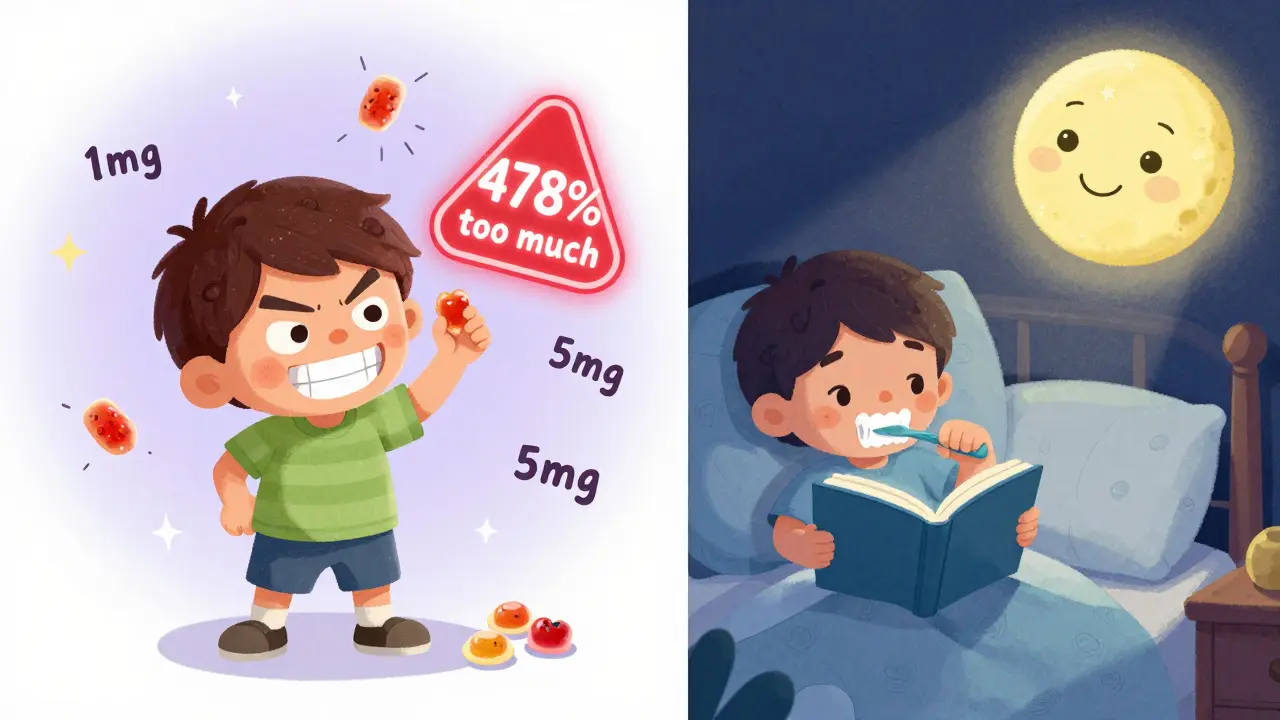
In the U.S., melatonin is sold as a dietary supplement, not a medicine. That means the FDA doesn’t test it for purity, strength, or safety before it hits store shelves. A 2022 study in JAMA Network Open found that 71% of melatonin products didn’t match the dose listed on the label. Some had as little as 17% of the stated amount. Others had up to 478% more. That’s not a typo. One gummy labeled as 1 mg actually contained nearly 5 mg.
When Is Melatonin Even Needed?
Before you reach for a bottle, ask: Is this a sleep problem-or a routine problem?
- Does your child have a consistent bedtime and wake-up time-even on weekends?
- Are screens turned off at least an hour before bed?
- Is the bedroom dark, cool, and quiet?
- Do they have a calming wind-down routine-reading, bath, quiet talk?
If the answer to most of these is no, then melatonin won’t fix the real issue. Sleep specialists agree: behavioral changes come first. The American Academy of Sleep Medicine says many sleep problems in kids can be resolved with better habits alone.
Melatonin is most helpful for children with diagnosed conditions like autism or ADHD, where sleep onset delays are common. Studies show it can reduce the time it takes to fall asleep by 30 to 60 minutes in these kids. But even then, it’s not a long-term crutch. It’s a temporary tool while you build better sleep habits.
What’s the Right Dose?
Dosage confusion is everywhere. One brand says 1 mg. Another says 5 mg. A doctor recommends 2 mg. The truth? There’s no one-size-fits-all dose for kids.
Experts agree on one thing: start low.
- Under age 3: Don’t use unless a pediatrician says so. Sleep issues in toddlers often resolve on their own.
- Ages 3-5: Start with 0.5 to 1 mg. Most respond to this. Never exceed 3 mg.
- Ages 6-12: Try 1 to 3 mg. Some may need up to 5 mg, but only after trying lower doses.
- Teens (13-18): 1 to 5 mg is usually enough. Some may need up to 10 mg under medical supervision.
Here’s the kicker: studies show that doses above 1 mg are already higher than what the body naturally produces. A 0.3 mg dose can mimic your child’s own melatonin levels. Higher doses don’t mean better sleep-they just mean more risk.
Also, avoid gummies. They often contain sugar, artificial colors, and inconsistent dosing. Liquid or tablet forms are easier to measure accurately. Look for products with the USP Verified Mark-it means the label dose was tested and confirmed.
When and How to Give It
Timing matters more than you think.
Melatonin isn’t a sleeping pill. It doesn’t knock kids out. It tells their body it’s time to wind down. So give it 30 to 60 minutes before bedtime. Too early? It might wear off before sleep. Too late? It could delay sleep even more.
Some kids need it 90 minutes before bed, especially if they’re very sensitive. Track how long it takes for them to fall asleep after taking it. Adjust timing by 15-minute increments until you find the sweet spot.
Never give melatonin to force sleep. If your child is crying, resisting, or throwing a tantrum, don’t use it as a bribe. That turns it into a behavioral tool, not a medical one.
Who Should Avoid It?
Melatonin isn’t safe for every child.
- Children under 3: Their sleep systems are still developing. Natural solutions work better.
- Children with autoimmune disorders: Melatonin can affect immune function.
- Children on certain medications: Especially seizure drugs, blood thinners, or immunosuppressants. Always check with a doctor.
- Children with depression or anxiety: Melatonin may worsen mood symptoms in some cases.
Also, don’t use it if your child has sleep apnea, restless legs, or chronic nightmares. These need different approaches.
What Are the Risks?
Short-term use (a few weeks) is generally well-tolerated. But side effects do happen.
- Drowsiness the next day
- Headaches
- Nighttime bedwetting
- Mild dizziness or irritability
Overdose symptoms are serious: vomiting, rapid heartbeat, low blood pressure, confusion. If your child takes more than recommended, call poison control or go to the ER immediately.
Long-term effects? We just don’t know yet. The American Academy of Pediatrics says we need more research on how melatonin affects puberty, growth, and brain development in kids. No one wants to find out in 10 years that a daily supplement they gave their 6-year-old disrupted their hormone system.
What About Other Sleep Aids?
Don’t use herbal supplements like valerian, chamomile, or CBD for kids. They’re not regulated, and safety data is nearly nonexistent. Some contain unlisted ingredients that could be harmful.
Over-the-counter antihistamines like diphenhydramine (Benadryl) are sometimes used off-label for sleep. But they’re not safe for routine use in children. They can cause next-day grogginess, dry mouth, constipation, and even paradoxical agitation in some kids.
Prescription sleep meds like zolpidem (Ambien) are not approved for children under 18 and carry serious risks including dependence and abnormal behaviors.
Bottom line: melatonin is the only sleep aid with any real evidence for kids-and even then, only under supervision.
How to Talk to Your Pediatrician
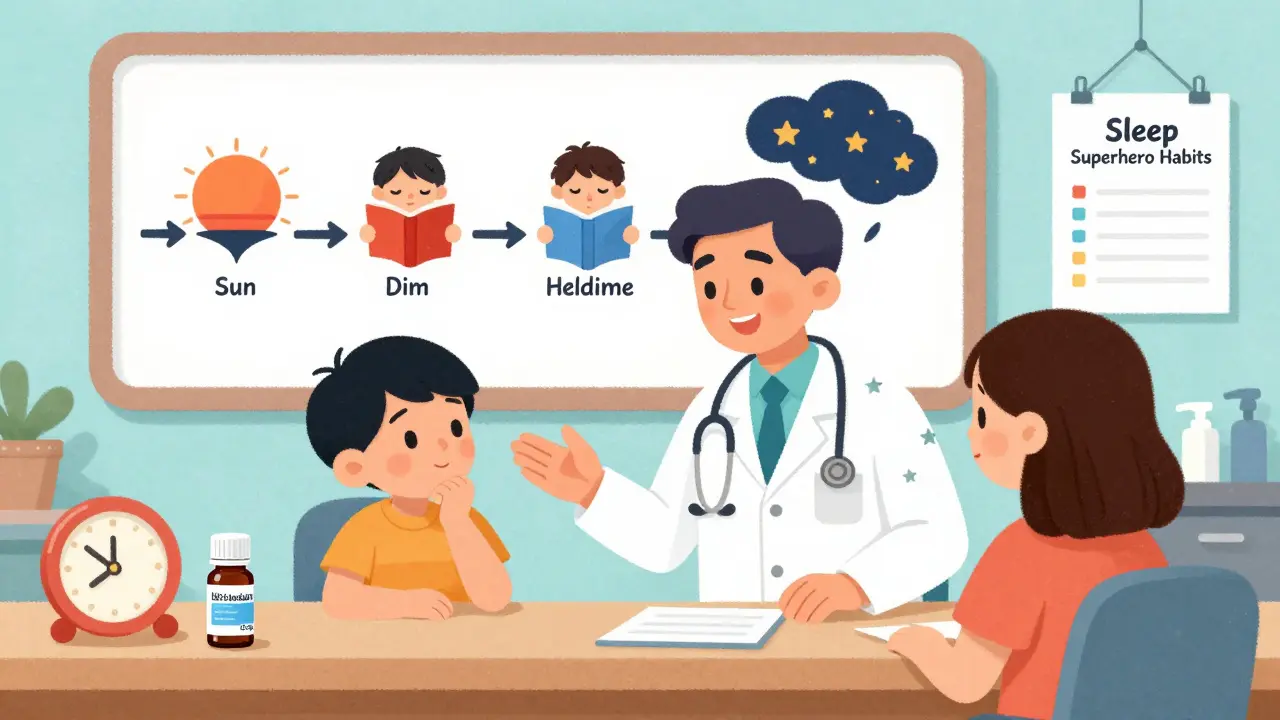
Don’t just buy it online and start giving it. Schedule a real conversation.
Bring this info:
- How long your child has had trouble sleeping
- What you’ve tried (bedtime routine, screen limits, etc.)
- Any medical conditions (ADHD, autism, anxiety)
- What brand and dose you’re thinking of using
Your pediatrician can help rule out underlying issues like sleep apnea, reflux, or anxiety. They can also recommend behavioral sleep programs-many hospitals offer them for free.
If they approve melatonin, ask: “What’s the lowest dose we can start with? How long should we try it? When should we stop?”
What’s the Best Alternative?
Fix the environment. Fix the routine. That’s it.
- Keep a consistent bedtime and wake-up time-even on weekends.
- Turn off screens 60 minutes before bed. Blue light blocks natural melatonin.
- Use dim red lights in the evening. Red light doesn’t interfere with sleep.
- Make the bedroom cool (65-68°F), dark, and quiet. Use blackout curtains.
- Read a book together. Or listen to calm music. Keep it quiet and predictable.
- Let your child pick a comfort item-a stuffed animal, a blanket-to build positive sleep associations.
These steps work. They’re proven. And they don’t carry any risk of overdose or unknown long-term effects.
Melatonin might help in the short term-but only if you’re already doing everything else right.
Can I give my 2-year-old melatonin?
No, unless a pediatrician specifically recommends it. Children under 3 rarely need melatonin because their sleep issues are usually tied to developmental changes, routines, or environmental factors. Most of these problems improve naturally with consistent bedtime routines, reduced screen time, and a calm sleep environment. Giving melatonin too early can interfere with their developing sleep system.
Is melatonin addictive for kids?
Melatonin itself isn’t addictive like prescription sleep meds. But kids can become dependent on it to fall asleep-if they don’t learn how to sleep without it. That’s why it’s meant to be a short-term tool, not a daily fix. The goal is to use it while building healthy sleep habits, then wean off.
How long should I give melatonin to my child?
For most children, try melatonin for no longer than two to three weeks. If sleep hasn’t improved, stop and talk to your pediatrician. For kids with autism or ADHD, longer use may be appropriate-but only under a doctor’s supervision. Never use it indefinitely without review.
Can melatonin affect my child’s growth or puberty?
We don’t have enough long-term data to say for sure. Melatonin plays a role in regulating hormones, and giving it daily over years could theoretically affect puberty timing. That’s why experts recommend using the lowest effective dose for the shortest time possible. Always monitor growth and development with your pediatrician.
Are gummy melatonin supplements safe for kids?
They’re risky. Gummies often contain inconsistent doses, added sugar, and artificial ingredients. A 2022 study found many gummy products had 70% more or less melatonin than labeled. For accuracy and safety, choose liquid or tablet forms with the USP Verified Mark. Always measure doses carefully.
What should I do if my child takes too much melatonin?
Call Poison Control at 1-800-222-1222 immediately. Symptoms of overdose include vomiting, drowsiness, rapid heartbeat, low blood pressure, and confusion. Don’t wait for symptoms to worsen. Even if your child seems fine, get medical advice-melatonin can stay in the system for hours and cause delayed reactions.
If your child still struggles to sleep after trying better routines and low-dose melatonin under medical guidance, ask about a pediatric sleep specialist. Many hospitals offer sleep clinics that test for disorders like sleep apnea, circadian rhythm delays, or anxiety-related insomnia. These aren’t just for kids with special needs-they’re for any child who’s not sleeping well.
Remember: sleep is not a problem to be fixed with a pill. It’s a skill to be learned. And like any skill, it takes time, consistency, and patience.
I used to give my 7-year-old melatonin gummies every night because he wouldn’t fall asleep until midnight. After reading this, I switched to a 0.5 mg tablet 45 minutes before bed and turned off screens an hour earlier. We’ve been doing it for three weeks now and he’s falling asleep by 9:15. No more crying, no more bribes. Just quiet bedtime stories and a dim red lamp. It’s not magic, but it works.
Also, ditch the gummies. My kid was addicted to the strawberry flavor, not the sleep aid.
Thanks for this.
The notion that melatonin is ‘natural’ and therefore benign is a dangerous fallacy perpetuated by the supplement industry. Melatonin is a neurohormone with receptor affinities in the hypothalamus, pituitary, and gonads. Administering exogenous hormones to developing children without rigorous clinical trials constitutes an uncontrolled longitudinal experiment. The FDA’s regulatory gap for dietary supplements is not a feature-it is a failure of public health infrastructure.
Moreover, the normalization of pharmacological sleep interventions for children reflects a broader cultural pathology: the infantilization of parenting and the commodification of biological regulation. Read the literature. Stop buying gummies.
WHO IS MAKING THESE MELATONIN GUMMIES?? I heard the CDC says they’re laced with lithium to make kids docile. My cousin’s neighbor’s sister works at a supplement factory and she said the government pays them to add it so kids don’t ask too many questions at school. Also, the labels are fake because the FDA is bought by Big Pharma. My 5-year-old started talking in code after taking it for two weeks. I stopped. Now he just sleeps on the floor. Maybe that’s better.
Also, red lights? That’s a Chinese mind control thing. Use candles. Real candles. Not LED.
You people are wasting time with all this routine nonsense. In India, we don’t give kids melatonin. We give them discipline. No screens after 7 PM. No exceptions. Bedtime at 8:30 sharp. If they cry, they cry. They learn. No supplements. No gummies. No ‘dosing.’ Just structure. Your kids are spoiled. You think sleep is a problem to be fixed with chemicals? No. It’s a problem of weak parenting. Fix your household rules first. Then maybe you won’t need this crap.
Also, US pediatricians are too lazy to tell you this. They’d rather sell you a pill.
Important clarification: melatonin is not a sedative. It’s a chronobiotic-meaning it shifts circadian timing, not induces sleep. This is why timing matters more than dose. Giving it at 8 PM when bedtime is 10 PM will delay sleep onset. Giving it at 9:30 PM when bedtime is 9 PM will cause rebound insomnia.
For children with autism or ADHD, low-dose (0.3–1 mg) melatonin taken 30–60 minutes before desired bedtime can be effective and safe-when used as an adjunct to behavioral sleep interventions, not a replacement. Always use USP-verified products. Avoid anything with added sugar, artificial colors, or ‘sleep blends.’
And yes, pediatricians should be the first point of contact. Many don’t know this stuff either. Bring them the data. They’ll thank you.
Stop giving kids melatonin. Just stop. You think you’re helping but you’re just lazy. Fix the bedtime. Turn off the TV. Read a book. That’s it. No fancy pills. No gummies. No science. Just do the thing. Your kid will sleep. Or they won’t. Either way you’re not poisoning them with hormones you bought off Amazon. Simple.
Also gummies are candy. Candy before bed is dumb. End of story.
As a dad of two neurodivergent kids, I get why people reach for melatonin. But I also know that if we don’t fix the environment first, no pill works long-term.
We used melatonin for 6 weeks when my son was 8-0.5 mg, USP verified, liquid form. We paired it with blackout curtains, white noise, and a 10-minute wind-down ritual. After two months, we weaned him off. He sleeps fine now without it.
Don’t treat the symptom. Treat the system. And if you’re not willing to do the work, then maybe your kid doesn’t need melatonin-they need a parent who shows up.
Let’s be real-the melatonin industry is a $1.8B market built on parental anxiety and regulatory arbitrage. You’re not ‘helping’ your kid-you’re outsourcing sleep hygiene to a pharmaceutical ghost company that doesn’t even have to prove efficacy.
And gummies? 😒 That’s not a supplement, that’s a candy bar with a placebo hormone. The fact that parents think 5 mg is ‘normal’ for a 6-year-old is a cultural indictment.
Fix the light. Fix the routine. Fix your own stress. Your kid’s sleep is a mirror.
Also-USP Verified. Always. Or don’t bother.
PS: If you’re reading this on your phone, put it down. Now.
My neighbor gave her 4-year-old melatonin every night for a year. Now the kid won’t sleep without it and has nightmares every night. I saw it with my own eyes. The mom said it was ‘just a little thing’ and now they’re seeing a child psychologist. I told her to stop but she didn’t listen. Now the school thinks the kid has anxiety. It’s not anxiety. It’s the melatonin. They’re messing with their hormones. What if it affects puberty? What if it messes with their brain? No one knows. We’re guinea pigs. And the FDA doesn’t care. They’re too busy letting Big Pharma sell sugar gummies labeled as medicine.
STOP IT. Just stop.
My son used to be a night owl at 6. We tried everything-white noise, warm baths, cuddles, stories. Nothing worked. Then we started dimming the lights an hour before bed, switched to red bulbs, and gave him 0.3 mg of USP melatonin 45 minutes before lights out. He started falling asleep in 20 minutes. No drama. No tears. Just calm.
Three months later, we stopped. He still sleeps like a log. Turns out, his body just needed a nudge-not a sledgehammer.
It’s not about pills. It’s about rhythm. Like a good jazz solo-you don’t force it. You just set the groove.
And yeah, ditch the gummies. They’re basically candy with a side of wishful thinking.
I JUST FOUND OUT MY 5-YEAR-OLD HAS BEEN TAKING MELATONIN FOR 8 MONTHS AND I NEVER KNEW???!!!
My wife gave it to him because she said he was ‘too hyper’ at bedtime. I didn’t even know we had it in the house. I just walked in and saw a jar of gummies labeled ‘SLEEPY TIME’ next to the Cheerios. I nearly had a heart attack. I called poison control. I called the pediatrician. I called my mom. I cried. I screamed. I threw the whole bottle in the trash.
HOW DID THIS HAPPEN??
WHY DID NO ONE TELL ME??
WHY IS THIS EVEN A THING??
WE ARE LIVING IN A NIGHTMARE.
Just wanted to say thank you for this post 🙏🏻 I used to give my 9-year-old 3 mg gummies because I thought ‘more is better.’ Now I’m down to 0.5 mg liquid, given 45 minutes before bed, and we’ve added a bedtime playlist of soft piano. He’s sleeping through the night. No more 11 PM tantrums. No more guilt.
Also, I bought blackout curtains. And turned off the Wi-Fi router at night. (Yes, I know it’s probably not necessary, but it makes me feel better 😅)
Parenting is hard. But small changes? They matter. So much.
❤️