

Biologic drugs aren’t like the pills you pick up at the pharmacy. You can’t just reverse-engineer them, mix some chemicals, and call it a day. That’s because they’re made from living cells - not chemicals. And that tiny difference changes everything.
What Makes Biologics So Different?
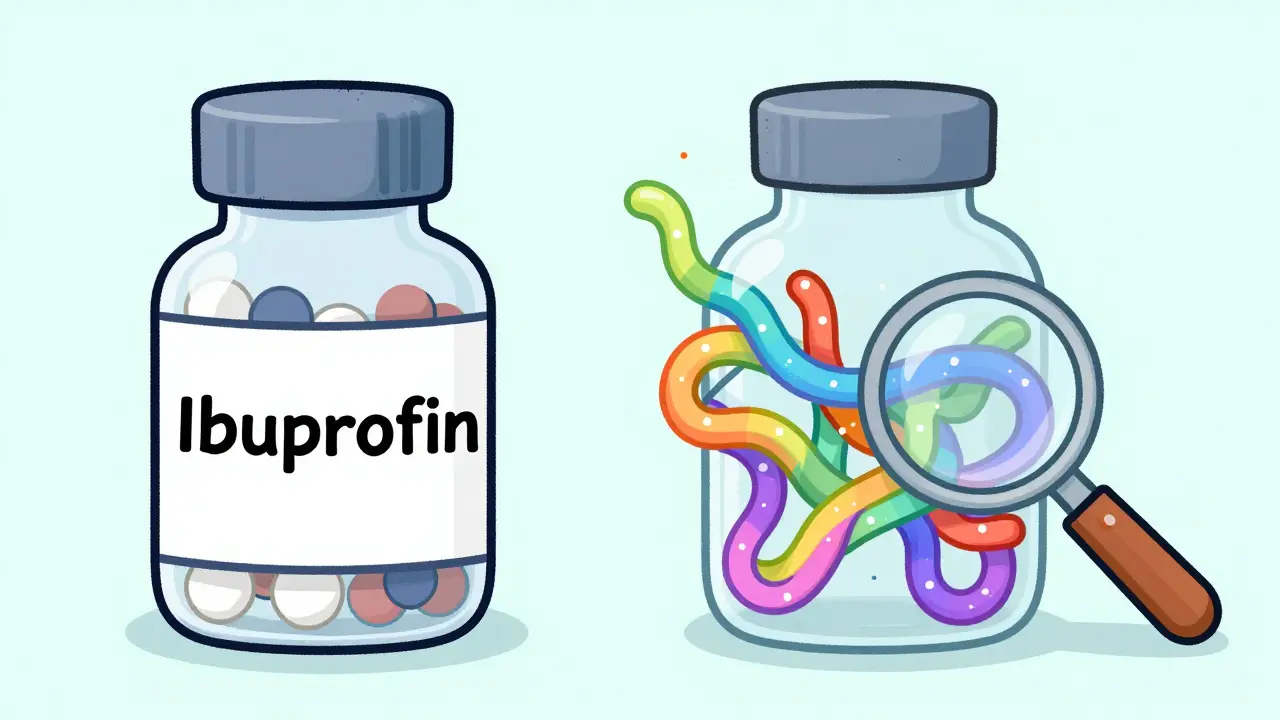
Think of a generic pill, like ibuprofen. It’s a simple molecule. Chemists can build it exactly the same way, every time. The active ingredient is always identical. That’s why a generic version costs a fraction of the brand name.
Now picture a biologic drug like Humira or Ozempic. These aren’t molecules you can sketch on paper and synthesize in a lab. They’re massive, complex proteins - up to 1,000 times larger than a typical drug. They’re grown inside living cells: hamster ovary cells, yeast, or bacteria. These cells are genetically tweaked to produce the exact protein needed. But here’s the catch: living cells don’t follow instructions perfectly. They’re messy, sensitive, and variable.
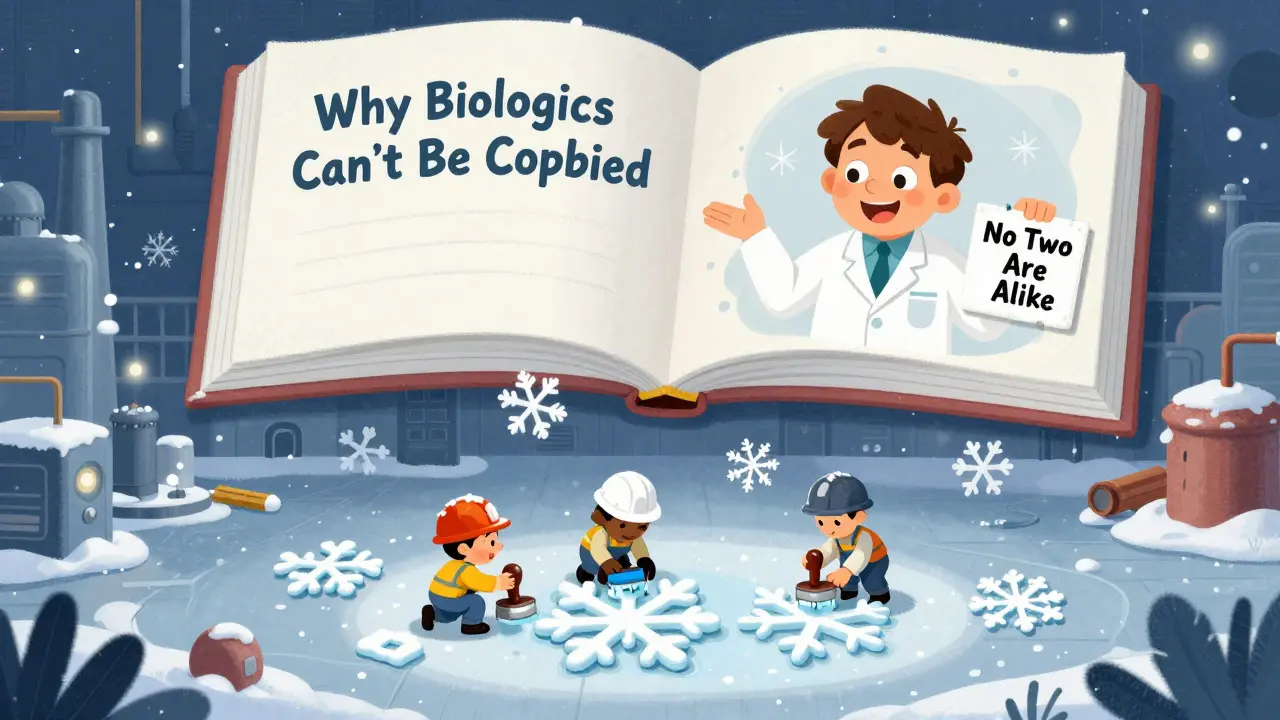
The FDA says it plainly: “Slight modifications, or inherent variations, to the protein are expected as a natural process of manufacturing.” That’s not a flaw - it’s biology. No two batches are ever exactly alike. And that’s why you can’t have an exact copy.
The Manufacturing Process: A 3- to 6-Month Marathon
Making a biologic isn’t a quick run. It’s a 3- to 6-month journey. First, scientists develop a cell line - a single cell that’s been engineered to make the protein. That cell is cloned, grown, and then placed into huge stainless steel tanks called bioreactors. These tanks are kept at 36-37°C, with perfect pH and oxygen levels. Feed the cells wrong, and they die. Too much oxygen? They stop producing the protein. Too little? They turn into something else entirely.
This upstream phase takes 10-14 days. Then comes downstream: purification. The protein must be pulled out of the cell soup. That’s done with protein A chromatography - a fancy filter that catches only the right protein. Then viral filtration, ultrafiltration, buffer swaps. Each step removes impurities. But even then, you’re left with a mixture of slightly different protein shapes - called variants. Some are therapeutic. Others are inactive. Or worse, potentially harmful.
Quality control eats up 30-40% of the total cost. For a small molecule drug? Maybe 5-10%. That’s because you can’t just test for one molecule. You’re testing for hundreds of possible variants. And even the best machines can only characterize 60-70% of the structure. The rest? Unknown.
Why Biosimilars Aren’t Generics
When a biologic’s patent expires, companies don’t make “generics.” They make biosimilars. And that’s not just semantics.
A generic version of a small molecule drug must be identical in active ingredient, strength, dosage, and performance. For biologics? That’s impossible. So regulators say: “Close enough, if it works the same.”
To get approved, a biosimilar must show it’s highly similar to the original - not identical. That means thousands of tests: structural analysis, biological activity, purity, stability. Then, clinical trials to prove it works the same way in patients and doesn’t cause more side effects. The FDA requires this full package. It’s not a shortcut. It’s a marathon.
Compare that to a generic pill. One bioequivalence study. Done in weeks. Costs a few hundred thousand dollars. A biosimilar? Often $100 million to $200 million. And it still takes 5-7 years to develop.
Why Manufacturing Fails So Often
Biologics manufacturing has a 10-15% failure rate. That means one out of every seven batches gets thrown out.
Why? Contamination. A single airborne particle. A dirty valve. A temperature spike for two hours. These aren’t theoretical risks. In 2022, BioPlan Associates surveyed 158 biopharma facilities. Thirty-five percent of batch failures were due to contamination. One Reddit user, a process engineer, described losing a $500,000 batch because a sensor failed and the culture got too warm for six hours.
Scale-up is another nightmare. Moving from a 2,000-liter bioreactor to 15,000 liters isn’t just bigger. It’s a whole new system. Amgen spent 17 months and $22 million in lost revenue just to make the jump. Why? Fluid dynamics change. Oxygen transfer drops. Cell behavior shifts. What worked in the lab doesn’t work in the factory.
Even the packaging matters. Biologics are fragile. They can denature if shaken too hard, exposed to light, or stored at the wrong temperature. One company lost $30 million in product because a shipping container’s refrigeration failed for 12 hours. No one noticed until it was too late.
The Regulatory Maze
The FDA’s guidelines for biologics run over 200 pages. The EMA’s? More than 300. That’s not bureaucracy - it’s necessity. Every raw material, every step, every test result must be documented. One product can generate 10,000 pages of paperwork.
Regulators don’t just want to know what happened. They want to know why it happened. Why did the protein variant level shift? Why did the viscosity change? That’s called Quality by Design (QbD). It’s not a checklist. It’s a deep understanding of how every variable affects the final product.
Some experts argue the rules are too strict. Dr. Almut Winterstein at the University of Florida says minor structural differences often have no clinical impact. But regulators can’t take that risk. A single bad batch could trigger immune reactions in patients. And once that happens, the trust is gone.
What’s Changing in the Industry?
There’s hope. New technologies are emerging. Continuous manufacturing - where the process runs nonstop instead of in batches - is now used in 15% of new facilities. Real-time sensors monitor pH, temperature, and protein levels as the product flows. AI is being used to predict failures before they happen.
Single-use bioreactors are replacing stainless steel tanks. They cut contamination risk by 60%. But they cost more - raw materials go up 15-20%. Still, most manufacturers say it’s worth it.
By 2030, experts predict modular, flexible factories will dominate. These are like LEGO sets for biologics: plug in a cell culture unit, a purification module, a filling line. You can switch products in weeks, not years. That’s huge for rare disease drugs that only need a few thousand doses a year.
But the biggest challenge remains: we still can’t fully understand what we’re making. Dr. R. Lou Sherman of the Alliance for Advanced Biologics says current tools only capture 60-70% of a monoclonal antibody’s structure. That means 30-40% is still a black box. Until we can map the whole thing, we’ll always be playing catch-up.
The Bigger Picture
Biologics now make up 42% of global drug sales - up from 32% in 2018. By 2028, that could hit 52%. They’re curing cancers, stopping autoimmune attacks, reversing type 2 diabetes. But they’re expensive. A year of Humira costs $70,000. Biosimilars bring that down - sometimes to $30,000. Still, they’re not cheap.
And the environmental cost? It’s staggering. Producing one dose of a biologic uses 10-15 times more water than a small molecule pill. The carbon footprint? Higher too. The industry knows this. Companies are starting to track sustainability metrics. But progress is slow.
Biologics aren’t just drugs. They’re living systems made into medicine. And because they’re alive, they can’t be copied. They can only be closely matched - with immense effort, precision, and cost.
If you think generics are simple, remember: you can’t make a copy of a snowflake. Each one is unique. And that’s exactly why biologics are so hard to replicate.
Can biologic drugs be copied exactly like generic pills?
No. Biologic drugs are made from living cells, which produce proteins with natural variations. Unlike small molecule generics, which are chemically identical to the original, biologics can’t be copied exactly because their structure is too complex and variable. Even tiny changes in the manufacturing process can alter the final product. That’s why regulators require biosimilars - highly similar, but not identical - versions instead of true generics.
Why are biosimilars so expensive to develop?
Developing a biosimilar costs $100 million to $200 million and takes 5-7 years. That’s because manufacturers must prove the product is highly similar to the original through thousands of lab tests, animal studies, and clinical trials. Unlike generics, which only need one bioequivalence study, biosimilars require full analytical characterization, plus safety and efficacy data. The complexity of the molecule and the strict regulatory requirements drive up the cost.
What causes biologic manufacturing batches to fail?
Contamination is the biggest cause - responsible for 35% of failures. Other common reasons include minor shifts in temperature, pH, or nutrient levels during cell culture. Even small changes can cause cells to produce the wrong protein variants or die off. Scale-up issues, equipment malfunctions, and storage problems during shipping also lead to batch losses. A single 6-hour temperature spike can ruin a $500,000 batch.
How do regulators ensure biosimilars are safe?
Regulators like the FDA require extensive proof. Manufacturers must show the biosimilar has the same amino acid sequence, similar higher-order structure, and comparable biological activity. They must also demonstrate identical pharmacokinetics and pharmacodynamics in humans, plus no increased immunogenicity risk. Clinical trials are required to confirm safety and effectiveness in the same conditions as the original drug. Only after all this data is reviewed is approval granted.
Will biosimilars ever be as cheap as generic pills?
Not anytime soon. Even with increased competition, biosimilars are unlikely to drop below 20-30% of the original drug’s price. That’s because the manufacturing process is still incredibly complex, costly, and risky. While generic pills can cost 90% less, biosimilars save maybe 15-40%. The infrastructure, testing, and regulatory burden simply don’t allow for the same price drop. But as technology improves and more players enter the market, prices will keep falling - just not to generic levels.
Wow, this is one of the clearest explanations I’ve ever seen on why biologics aren’t just fancy pills. I work in supply chain for a mid-sized pharma firm, and I’ve seen firsthand how a 0.5°C spike in a bioreactor can tank an entire batch. It’s like trying to bake the same cake with a living, breathing oven that changes its mind every time.
OMG YES. I’ve been yelling this from the rooftops for years! People think ‘generic’ means ‘same thing cheaper’-but you can’t replicate a snowflake, you know? Biologics are alive. They breathe, they sweat, they get cranky if you look at them wrong. And that’s why we need to stop pretending biosimilars are just ‘cheap knockoffs.’ They’re miracles of science with a 10% failure rate. Respect.
While your explanation is technically accurate, it fails to acknowledge the systemic manipulation by Big Pharma to artificially inflate prices under the guise of ‘biological complexity.’ The real reason biosimilars cost so much is patent evergreening and regulatory capture-not biology. The FDA’s 200-page guidelines? Designed to keep competition out. This isn’t science-it’s corporate theater.
Batch failure rates are brutal. One sensor glitch. One wrong feed. One hour too warm. That’s it. No second chances. The real cost isn’t the drug-it’s the lost time, the wasted talent, the sleepless nights. We’re not making pills. We’re parenting living machines.
Let’s be honest-this whole ‘biologics are too complex to copy’ narrative is just a smokescreen. If you can’t replicate it, maybe you didn’t design it right in the first place. The fact that we’re still using 1980s-era cell lines and manual chromatography is a scandal. This isn’t biology holding us back-it’s laziness. We’ve put men on the moon but can’t stabilize a protein? Pathetic.
Thanks for breaking this down so clearly. It’s easy to get frustrated with drug prices, but understanding the real hurdles makes me appreciate how much effort goes into each dose. We need more patience and less outrage-especially when lives are on the line.
It’s fascinating how biology resists standardization. We build machines to control everything, yet the most powerful medicines are born from chaos. Maybe the answer isn’t to perfect the process-but to accept the imperfection. To treat the variability not as a flaw, but as a feature of life itself.
Who really owns the cell lines? The FDA? The labs? Or are they secretly patented by shadow entities in Geneva? And why is there no public database of all the ‘minor variations’ that get approved? I’ve seen data leaks-there are batches with 37 different glycosylation patterns and still get cleared. This isn’t science. It’s a controlled demolition of public trust.
Thank you for sharing this. As someone from India, I see how biosimilars have transformed access to life-saving treatments. Yes, they’re expensive-but compared to the original, they’re a miracle. The real challenge is not the science-it’s making sure these medicines reach the people who need them most. Technology can help, but compassion must lead.
Actually, the term ‘biosimilar’ is a regulatory misnomer. By definition, a ‘similar’ product implies equivalence, but the FDA’s own guidance acknowledges that structural heterogeneity can lead to immunogenicity differences. Therefore, calling them ‘biosimilars’ is misleading-it should be ‘biologically analogous therapeutic protein product.’ And until the nomenclature reflects the true complexity, we’re perpetuating a dangerous illusion.
Okay but have you thought about how this affects patients? My cousin has been on Humira for 12 years. They switched her to a biosimilar last year and she got a rash that wouldn’t go away for months. The doctors said it was ‘probably unrelated.’ But I know. I’ve seen the emails. The company knew. They just didn’t tell anyone. This isn’t science-it’s a cover-up.
Bro, I work in a biotech lab in Bangalore. We make biosimilars. It’s hard. Really hard. One day we lost 300k because a power cut lasted 11 minutes. But we don’t give up. We fix it. We learn. We keep going. These drugs save lives. And yeah, they’re expensive-but we’re trying. Don’t hate the process. Help us improve it.
I appreciate how you highlighted the environmental cost. Most people don’t realize that producing one dose of a biologic uses enough water to fill a small swimming pool. Sustainability needs to be part of the conversation-not an afterthought. Maybe the future isn’t just better manufacturing… but less manufacturing.
Love this. As an Indian guy who’s seen both sides-the crazy cost of originals and the hope of biosimilars-I just want to say: don’t give up on the science. It’s messy, it’s expensive, but it’s working. And someday, maybe we’ll have machines that understand proteins like we understand words.