

Imagine waking up to find your child standing in the hallway, eyes wide open but unresponsive, or your spouse has just walked downstairs in the middle of the night - fully dressed, making coffee, and doesn’t remember any of it. These aren’t dreams. They’re episodes of sleepwalking or night terrors, two of the most common and unsettling forms of parasomnia. Unlike nightmares, where you wake up scared but remember every detail, these events happen during deep sleep, and the person usually has zero memory of them afterward. The good news? Most cases aren’t dangerous, and many resolve on their own - especially in children. But when episodes become frequent, violent, or put someone at risk of injury, it’s time to act.
What Exactly Are Sleepwalking and Night Terrors?
Sleepwalking and night terrors both fall under the same category: disorders of arousal from NREM sleep. That means they happen during the deepest part of your sleep cycle - stages 3 and 4, also called slow-wave sleep. This usually occurs within the first 90 to 120 minutes after falling asleep. The brain is partially awake, but the body is still in deep sleep mode. That’s why someone can walk, talk, or scream without being fully conscious.
Night terrors are intense. A child might suddenly sit bolt upright, scream, sweat, breathe fast, and have a heart rate jumping to 120-140 beats per minute. Their eyes may be open, but they’re not seeing you. Trying to wake them usually doesn’t work - and can make things worse. Episodes last 30 seconds to 5 minutes. Afterward, they fall back into deep sleep and won’t remember anything in the morning.
Sleepwalking is more about movement. People might get out of bed, open doors, walk around the house, or even drive a car in rare cases. They usually move slowly and deliberately, not like they’re panicked. Episodes last longer - 5 to 15 minutes - and end when the person either returns to bed or falls asleep somewhere else. Again, they won’t recall it the next day.
These aren’t psychological issues. They’re neurological events tied to sleep stage transitions. About 1-15% of children experience sleepwalking at some point, with peak rates between ages 4 and 8. Night terrors hit hardest between ages 3 and 7. In adults, both are less common - around 1-4% - but when they appear for the first time in adulthood, they’re a red flag. Adult-onset parasomnia often links to underlying conditions like sleep apnea, restless legs syndrome, or even neurological disorders.
Why This Isn’t Just a ‘Phase’ - When to Worry
Parents often hear, “They’ll grow out of it.” And they usually do. About 80% of childhood sleepwalking and 90% of night terrors disappear by adolescence. But waiting isn’t always safe. The biggest danger isn’t the episode itself - it’s what happens during it.
According to the Sleep Foundation, 73% of families dealing with sleepwalking report at least one injury. Falls, cuts from sharp objects, walking into walls, or even leaving the house are real risks. One parent in Boston told me their 6-year-old opened the front door during a sleepwalking episode and walked halfway down the block before being found by a neighbor. Another child broke their arm after falling from the second-floor landing.
Here are five red flags that mean it’s time to see a specialist:
- Episodes happen more than twice a week
- There’s violence - hitting, kicking, or yelling aggressively
- The person stays confused for more than 15 minutes after waking
- It starts for the first time after age 10
- There’s suspected sleep-related eating - eating or drinking during sleep without memory
If any of these apply, don’t wait. Adult-onset parasomnia can be a sign of something deeper - like Parkinson’s, epilepsy, or obstructive sleep apnea. Up to 40% of adults with new-onset sleepwalking or night terrors have an undiagnosed sleep breathing disorder.
First Step: Make the Bedroom Safe - No Excuses
Before you try anything else - therapy, medication, sleep schedules - fix the environment. This isn’t optional. It’s non-negotiable.
Start with the basics:
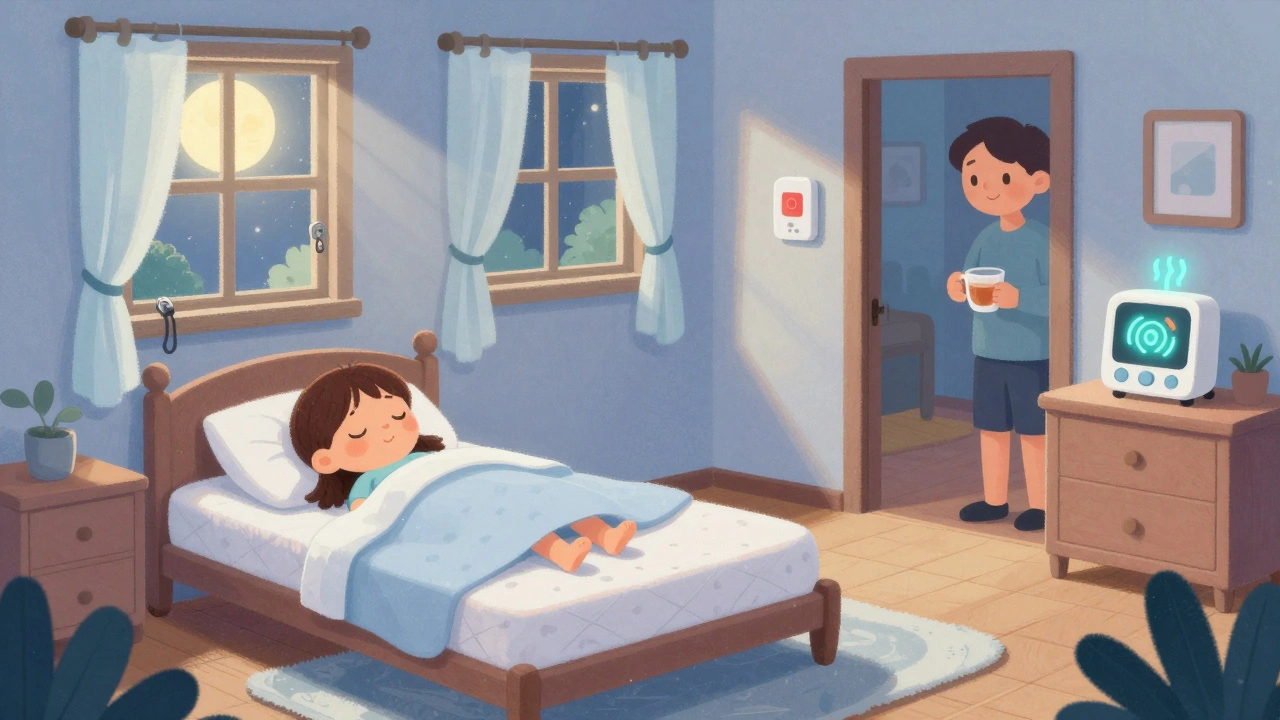
- Lock all windows and exterior doors. Use childproof locks or alarms that trigger if opened.
- Install a door alarm - simple, battery-powered devices cost $20-$50. They beep loudly when the door opens.
- Remove sharp objects from near the bed: lamps, glass vases, knives, scissors.
- Put a mattress on the floor if the bed is elevated. Falls are the #1 cause of injury.
- Clear the floor of toys, clothes, or cords. Tripping hazards are real.
- Consider using a baby monitor with motion detection to alert you if someone gets up.
These steps cut injury risk by up to 75%, according to Sleep Foundation data. One family in Massachusetts reported zero injuries after installing a door alarm and moving their son’s bed to the floor. Simple. Cheap. Life-saving.
Scheduled Awakenings: The Most Effective Non-Medical Fix
If episodes happen around the same time every night - say, 1:30 a.m. - you can use a technique called scheduled awakenings. It’s not guesswork. It’s science.
Here’s how it works:
- Track the exact time episodes start for at least a week. Use a notebook or phone app.
- Wake the person 15-30 minutes before that time. Gently. No yelling. Just turn on the light, say their name, and have them sit up for 30 seconds.
- Keep them awake for 5 full minutes - have them drink water, walk around the room, use the bathroom.
- Put them back to bed. Repeat every night for 7-14 days.
This interrupts the brain’s pattern of entering deep sleep at the same time. Success rates? 70-80% in children, according to Children’s Hospital of Philadelphia. One mom in Boston did this for her 7-year-old for two weeks. The episodes stopped completely and haven’t returned in two years.
It’s not fun to wake someone up every night. But compared to the fear of them wandering into traffic or falling down stairs, it’s worth it.
Sleep Extension: The Hidden Key Most People Miss
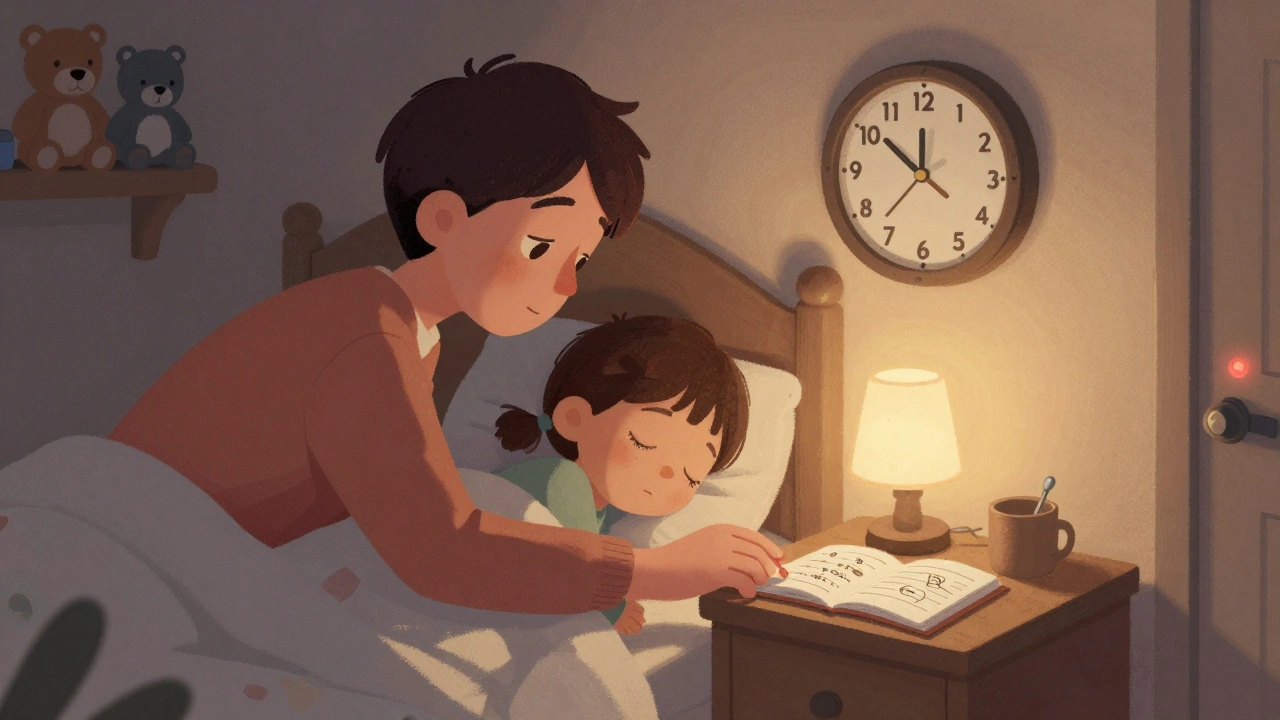
Most people don’t realize that sleep deprivation is the #1 trigger for parasomnias. When you’re tired, your brain spends more time in deep slow-wave sleep - the exact stage where sleepwalking and night terrors happen.
Dr. Carlos Schenck’s research at the Minnesota Regional Sleep Disorders Center showed that adding just 30-60 minutes of extra sleep per night reduced episodes by 65% in kids. That’s more effective than most medications.
How to do it:
- Move bedtime up by 15-30 minutes. Don’t just go to bed earlier - actually fall asleep earlier.
- Keep wake-up time consistent, even on weekends. A 30-minute window is the max.
- Aim for age-appropriate sleep: 9-11 hours for kids 6-13, 8-10 for teens, 7-9 for adults.
- Eliminate screen time 60 minutes before bed. Blue light delays melatonin.
One adult patient in Boston increased his sleep from 6.5 to 8 hours over three weeks. His weekly night terrors dropped from 5 to 1. He didn’t take a single pill.
What About Medication?
Medication is rarely the first choice - and should never be the only choice. Only 5-10% of cases need drugs, according to Dr. Mark Pressman’s 2023 review.
When it’s used:
- Clonazepam (a benzodiazepine): Works for 60-70% of severe cases. Taken 30-60 minutes before bed. But it carries risks - drowsiness, dependence, tolerance in as little as 3 months.
- Melatonin: A safer alternative. Helps regulate sleep cycles. Shows 40-50% effectiveness, especially in children. Dose: 3-6 mg, 30 minutes before bed.
- Daridorexant: A newer orexin blocker. Still in trials but shows 55% reduction in night terrors with fewer side effects than clonazepam.
Never start medication without a sleep specialist’s guidance. And always combine it with behavioral changes. Drugs treat symptoms. Behavior treats the root cause.
When to See a Sleep Specialist
You don’t need to wait until someone’s hurt. If episodes happen more than once a week, last longer than 10 minutes, or you’re scared for safety - get evaluated.
A sleep study (polysomnography) with video monitoring is the gold standard. It records brain waves, heart rate, breathing, and movement. This rules out seizures, sleep apnea, or REM sleep behavior disorder (RBD), which mimics sleepwalking but happens in REM sleep and is more common in older men.
Insurance often covers this if you have documented episodes and safety concerns. Medicare covers it 78% of the time. Private insurers? Around 65%. If you’re denied, appeal. Cite the American Academy of Sleep Medicine guidelines.
What Doesn’t Work - And What’s a Waste of Time
Some myths persist. Let’s clear them up:
- Don’t try to wake someone during an episode. You’ll likely get a violent reaction. Just guide them gently back to bed.
- Don’t use hypnosis or dream therapy. No solid evidence these work for NREM parasomnias.
- Don’t assume it’s stress or anxiety. While stress can trigger episodes, it’s rarely the cause. The root is sleep stage instability.
- Don’t wait for it to “go away.” If it’s happening in adulthood, it won’t resolve on its own.
Looking Ahead: New Tools and Hope
The field is evolving. In 2022, the FDA approved the Nightware System - an Apple Watch app that detects rising heart rate before a night terror starts. It gently vibrates to interrupt the episode before it fully develops. In trials, it cut episodes by 35%.
Apps like Sleepio now offer CBT for parasomnias (CBT-P) through smartphones. A 2023 study showed a 48% drop in sleepwalking episodes after 8 weeks of guided therapy.
Genetic research is also advancing. A 2023 study found a link between sleepwalking and a variant in the DEC2 gene. Families with this gene are 87% more likely to have multiple members with the condition.
These tools aren’t magic. But they show we’re moving beyond just locking doors. We’re learning how to intervene before the episode even starts.
Final Thoughts: You’re Not Alone
Sleepwalking and night terrors are terrifying - for the person experiencing them and for everyone watching. But they’re not rare. They’re not your fault. And they’re not untreatable.
The path forward is simple: safety first, sleep second, and only then, if needed, medication. Most children grow out of it. Most adults can manage it. And with the right steps, families can sleep again - without fear.
If you’re reading this because you’re worried about someone you love - start tonight. Lock the doors. Set the alarm. Add 15 minutes to their sleep. Track the episodes. And if it doesn’t improve in a month - see a specialist. You don’t need to wait for disaster to strike.
Are sleepwalking and night terrors the same thing?
No. Both happen during deep sleep, but they look different. Night terrors are intense emotional outbursts - screaming, sweating, rapid heartbeat - with no memory. Sleepwalking is physical movement - walking, talking, even cooking - also with no memory. Night terrors are more about fear and autonomic arousal; sleepwalking is about motor activity.
Can adults have sleepwalking or night terrors?
Yes. While most common in children, 1-4% of adults experience them. Adult-onset cases are different - they’re often linked to other conditions like sleep apnea, PTSD, or neurological disorders. If sleepwalking or night terrors start after age 10, it’s important to get evaluated by a sleep specialist.
Should I wake someone during a night terror or sleepwalking episode?
No. Trying to wake them can cause confusion, agitation, or even aggression. Instead, gently guide them back to bed. Speak calmly. Turn on a soft light if needed. They’ll usually settle down on their own within a few minutes.
Is it safe to use melatonin for sleepwalking in children?
Yes, melatonin is generally safe for children and has shown 40-50% effectiveness in reducing episodes. It helps regulate the sleep-wake cycle without the risks of benzodiazepines. Start with 3 mg, 30 minutes before bedtime. Always consult a pediatrician first.
How long does it take for scheduled awakenings to work?
Most families see improvement within 7-14 days of consistent application. Success rates are 70-80% when done correctly - meaning waking the person 15-30 minutes before the usual episode time, keeping them awake for 5 minutes, and repeating nightly. It’s not instant, but it’s one of the most reliable non-medical treatments.
Can sleep apnea cause night terrors?
Yes. Up to 40% of adult-onset parasomnias are linked to untreated sleep apnea. When breathing stops during sleep, the brain wakes up partially - triggering arousal disorders like night terrors or sleepwalking. Treating the sleep apnea (often with CPAP) frequently resolves the parasomnia without any other intervention.
Do I need a sleep study to diagnose parasomnia?
Not always. For children with clear, typical episodes and no red flags, a detailed history is often enough. But for adults, frequent episodes, violence, or new-onset symptoms, a sleep study with video monitoring is essential. It rules out seizures, REM behavior disorder, and sleep apnea - conditions that mimic parasomnia but need different treatment.
Can stress cause sleepwalking?
Stress doesn’t cause sleepwalking, but it can trigger episodes in people who are already prone to them. Lack of sleep, illness, fever, or irregular schedules are bigger triggers. Managing stress helps, but the core issue is sleep architecture - not psychology.
Thank you for this incredibly clear and practical guide. I’ve been terrified for months after my 5-year-old started sleepwalking twice a week. The scheduled awakenings suggestion is the first thing that actually made sense to me. We started last night - woke him at 1:15 a.m., had him drink water, sat with him for five minutes. He didn’t even stir. We’re doing this every night now.
Lock doors get alarm sleep more that’s it
Wow. This is the kind of content that should be mandatory in every parenting class! Who else is sick of seeing these so-called 'experts' push therapy and meds before fixing the damn environment? Lock the doors. Move the bed. Add sleep. Done. No fancy gadgets. No expensive consultants. Just basic human responsibility. If your kid’s walking around at night, it’s not 'stress' - it’s your fault for not securing the house!
India has been dealing with this for centuries. Our grandparents used to tie a thread around the child's ankle and whisper mantras - and it worked better than any alarm. Now we rely on American gadgets and apps. Pathetic. Sleepwalking is not a disorder - it's a spiritual disturbance. You need a pandit, not a sleep study. Why do you think every temple in South India has a 'sleeping room' for children? Because we knew this long before your CPAP machines!
While the practical advice is commendable, the article's casual tone and lack of citations from peer-reviewed journals undermines its credibility. The Sleep Foundation is not a scholarly source, and the anecdotal data from Boston families does not constitute empirical evidence. Furthermore, the dismissal of psychological factors as irrelevant is scientifically untenable. Stress, trauma, and attachment disorders are well-documented triggers in the DSM-5-TR. This piece reads more like a blog post than a medical guideline.
Everyone’s acting like this is new. My cousin in Chennai sleepwalked for 12 years. Her parents locked the doors, put a mattress on the floor, and woke her up every night - just like you said. But then she turned 18 and started sleep-eating pizza and drinking soy sauce. No one talked about that. So now she’s obese, diabetic, and still does it. You’re all missing the point. It’s not just about safety - it’s about control. The body doesn’t want to be controlled. And when you force it… it rebels. In worse ways.
OMG I’ve been waiting for someone to write this!! 😭 I’m a sleep specialist in Delhi and I’ve seen SO many families suffer because they were told to ‘wait it out.’ My 10-year-old patient had night terrors every night - his parents were on the verge of divorce from the stress. We did scheduled awakenings + melatonin + 15 extra minutes of sleep. Within 10 days - silence. No screaming. No wandering. Just… peace. I cried. My patient cried. His mom cried. This isn’t just advice - it’s a lifeline. Thank you for saying what no one else dares to.
This gave me hope. My husband started sleepwalking after his dad passed. We thought it was grief. Turns out it was sleep apnea. We got him a CPAP. Three weeks later - no more episodes. He slept through the night for the first time in two years. I just wanted to say - you’re not alone. And sometimes the fix is simpler than you think. Just breathe. And lock the door.