

Primary Sclerosing Cholangitis (PSC) isn’t just another liver condition. It’s a slow, silent thief that attacks the bile ducts - the tubes that carry bile from the liver to the intestines. Over time, these ducts become inflamed, scarred, and narrowed until bile can’t flow properly. When bile backs up, it poisons the liver, leading to damage, cirrhosis, and eventually liver failure. There’s no cure. No magic pill. And for many, the journey from first symptoms to diagnosis takes years.
What Exactly Happens in PSC?
In a healthy liver, bile flows freely through ducts that look like tiny pipes, averaging 3 to 8 millimeters in diameter. In PSC, those ducts shrink - sometimes down to under 1.5 mm - because of fibrosis. This isn’t just a blockage. It’s a structural collapse. The immune system mistakenly attacks the bile duct lining, triggering chronic inflammation. The body tries to heal, but instead of repairing, it builds scar tissue. Over time, the ducts harden, twist, and disappear in patches. This is why imaging tests like MRCP show a "beaded" appearance - areas of narrowing followed by normal-looking segments.
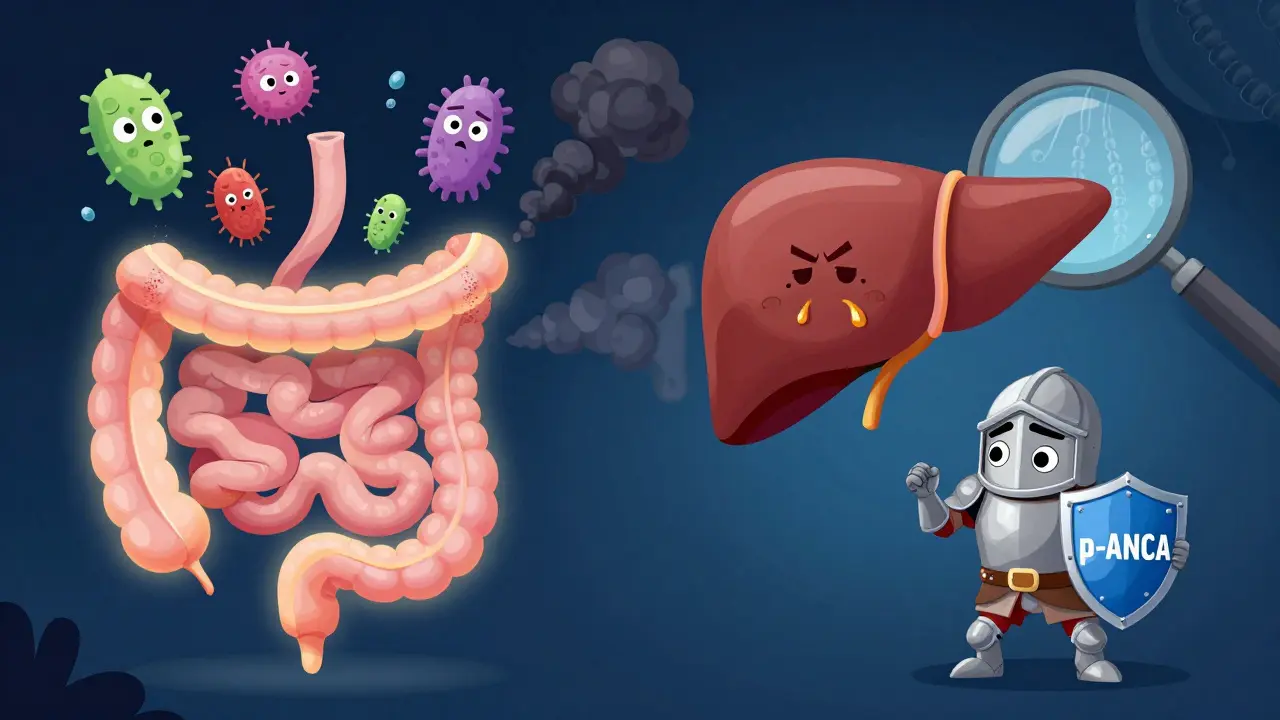
The disease affects both the ducts inside the liver (intrahepatic) and those outside (extrahepatic). Unlike Primary Biliary Cholangitis (PBC), which mainly targets small ducts and often shows a clear antibody marker (AMA), PSC is trickier. Only 20-50% of patients test positive for p-ANCA, and even that’s not specific. That’s why many get misdiagnosed for years.
Who Gets PSC - And Why?
PSC doesn’t pick randomly. It hits men twice as often as women. Most are diagnosed between 30 and 50, with the average age being 40. In Sweden, it affects about 6.3 in every 100,000 people - one of the highest rates in the world. In the U.S., roughly 25,000 people live with PSC. And while it’s most common in people of European descent, it’s increasingly recognized in Asian populations, often in a milder, small-duct form.
Genetics play a huge role. The strongest link is to the HLA-B*08:01 gene variant, which raises risk by more than double. But genes alone don’t cause it. Something in the gut triggers the immune system. That’s why 60-80% of PSC patients also have inflammatory bowel disease - mostly ulcerative colitis. Researchers now believe gut bacteria, or dysbiosis, release toxins that travel to the liver and ignite the attack on bile ducts. Dr. Tom Hemming Karlsen calls it the "gut-liver axis," and it’s the key to understanding why PSC behaves so differently from other liver diseases.
Symptoms You Can’t Ignore
Many people with PSC feel fine for years. That’s why it’s often found accidentally during routine blood tests showing elevated liver enzymes - especially ALP and GGT. But when symptoms appear, they stick around.
- Fatigue - reported by 92% of patients. Not just "tired." It’s bone-deep exhaustion that doesn’t improve with sleep.
- Itching (pruritus) - affects 78%. Patients describe it as "coming from inside the bones," worse at night. It’s not a rash - it’s a neurological signal from bile buildup.
- Abdominal pain - usually in the upper right, dull and persistent.
- Jaundice - yellowing skin and eyes - signals advanced disease.
- Cholangitis - fever, chills, and sharp pain mean a bacterial infection has taken hold in the blocked ducts. This is an emergency.
On patient forums, one person wrote: "The itching is unbearable - it’s not just skin deep but feels like it’s coming from my bones." That’s not exaggeration. That’s science.
Diagnosis: The Long Road
Most patients wait 2 to 5 years for a diagnosis. Why? Because PSC mimics other conditions. Blood tests show liver stress, but they don’t confirm PSC. The gold standard is MRCP - a non-invasive MRI scan of the bile ducts. It shows the telltale beading pattern. If MRCP is unclear, ERCP (an endoscopic procedure) can confirm it, but it’s riskier and used less now.
Doctors also check for IBD. If you have ulcerative colitis and abnormal liver enzymes, PSC must be ruled out. Biopsies aren’t always helpful - the liver damage often looks normal until late stages. That’s why imaging is king.
What Doctors Can’t Fix - Yet
Here’s the hard truth: no drug stops PSC from progressing. Ursodeoxycholic acid (UDCA) was once the go-to treatment. But multiple trials show it doesn’t improve survival. In fact, high doses (28-30 mg/kg/day) may increase risk of complications. The European Association for the Study of the Liver (EASL) now says: don’t use it routinely.
So what’s left? Symptom management.
- For itching: Rifampicin (150-300 mg/day) works in half of patients. Naltrexone (50 mg/day) helps if itching is linked to opioid pathways. Colesevelam binds bile acids and reduces itching in some.
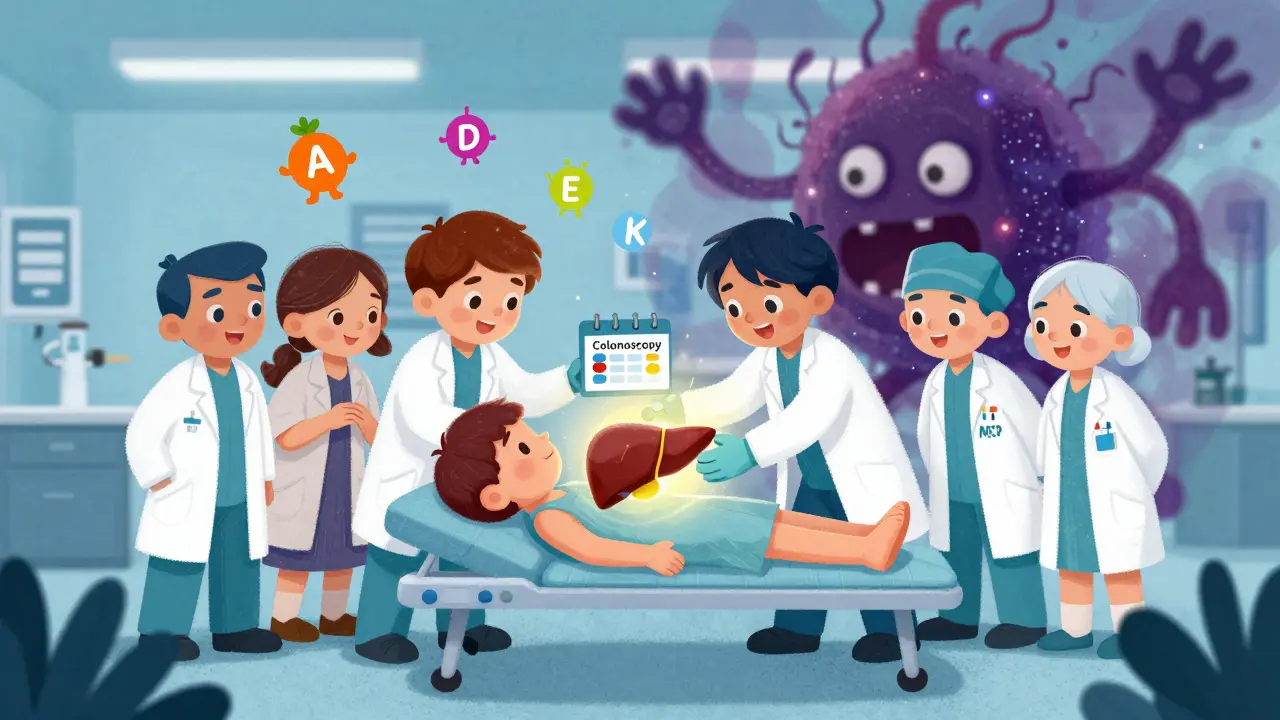
- For vitamin deficiencies: Fat-soluble vitamins A, D, E, and K are poorly absorbed. Quarterly blood tests and supplements are essential.
- For IBD: Colonoscopies every 1-2 years are non-negotiable. PSC raises colorectal cancer risk to 10-15% over a lifetime.
- For cholangitis: Antibiotics - fast. This is an infection that can kill if ignored.
Patients treated at specialized PSC centers report 85% better symptom control than those in general hepatology clinics. That’s not coincidence. It’s expertise.
The Shadow: Cholangiocarcinoma
Every PSC patient lives with a quiet threat - bile duct cancer, or cholangiocarcinoma. The risk is 1.5% per year. That means over 15 years, nearly a quarter of patients develop it. And once it happens, survival drops to 10-30% in five years. That’s why surveillance is critical. MRCP and blood tests for CA19-9 are done every 6-12 months. No test is perfect, but catching it early is the only chance.
The Only Real Treatment: Transplant
When the liver fails, transplant is the only option. And it works - better than most people realize. Five-year survival after transplant exceeds 80%. Most patients return to normal life. But it’s not a cure. PSC can come back in the new liver, though slowly. And finding a donor? That’s another battle. The waitlist is long. And not everyone qualifies.
Transplant-free survival varies. Asymptomatic patients at diagnosis have a 77% chance of surviving 10 years without needing a transplant. Symptomatic patients? Only 51%. That gap shows why early detection matters.
Hope on the Horizon
Research is moving faster than ever. Obeticholic acid (OCA) showed a 32% drop in liver enzymes in a phase 3 trial. Cilofexor, a non-steroidal FXR agonist, reduced ALP by 41% in phase 2. Both target bile acid regulation. Fibrates and norUDCA are also in trials. These aren’t cures - yet - but they’re the first drugs that might slow the disease.
The International PSC Study Group is now tracking over 3,000 patients across 12 countries. That kind of data is how we’ll find patterns, predict progression, and personalize treatment. In five years, experts predict at least two disease-modifying therapies will be approved. That’s not hype - it’s based on current trial trajectories.
What You Need to Know
- PSC is rare but serious. It’s not just "liver problems." It’s a systemic immune disease.
- There’s no cure. But there are ways to manage symptoms and delay complications.
- Specialized centers make a difference. Seek out hepatologists who treat PSC regularly.
- Monitor for IBD and cancer. Colonoscopies and liver scans are part of your routine now.
- Vitamin levels matter. Don’t skip supplements.
- Transplant saves lives. If you’re eligible, don’t delay evaluation.
PSC is brutal. But it’s not hopeless. With better awareness, better care, and better science, the future is getting brighter - one patient at a time.
Can PSC be cured with medication?
No, there is currently no medication that can cure Primary Sclerosing Cholangitis. Drugs like UDCA were once used but have been shown to offer no survival benefit and may even cause harm at high doses. Current treatments focus on managing symptoms like itching and fatigue, preventing complications like infections and vitamin deficiencies, and monitoring for liver cancer. Liver transplantation remains the only definitive treatment for end-stage disease.
Is PSC the same as PBC?
No, PSC and Primary Biliary Cholangitis (PBC) are different diseases, even though both affect bile ducts. PBC mainly damages small bile ducts inside the liver and is strongly linked to anti-mitochondrial antibodies (AMA), found in 95% of cases. PSC affects both large and small ducts inside and outside the liver, and only 20-50% of patients test positive for p-ANCA. PSC is also strongly tied to inflammatory bowel disease, which is rare in PBC. Their treatments and progression patterns differ significantly.
Why does PSC cause itching?
Itching in PSC is caused by bile acids building up in the bloodstream because the ducts are blocked. These bile acids stimulate nerve endings in the skin and spinal cord, triggering intense, persistent itching - often described as deep or "bone-deep." Unlike allergic itching, this isn’t relieved by scratching. Medications like rifampicin, naltrexone, and colesevelam work by either reducing bile acid levels or blocking the nerve signals that cause the itch.
Do I need to get colonoscopies if I have PSC?
Yes - if you have PSC along with ulcerative colitis or Crohn’s disease, you’re at higher risk for colorectal cancer (10-15% lifetime risk). Colonoscopies should be done every 1-2 years, starting 8-10 years after your IBD diagnosis. Biopsies during these exams help detect early changes that could become cancer. Even if you don’t have IBD symptoms, your doctor may still recommend screening based on your PSC risk profile.
Can PSC come back after a liver transplant?
Yes, PSC can recur in the transplanted liver, though it usually happens slowly - often 10 or more years after transplant. The exact cause isn’t fully understood, but it’s likely linked to the same immune and gut factors that caused the original disease. Fortunately, recurrence doesn’t always lead to liver failure, and many patients live normal lives for decades after transplant. Regular monitoring with blood tests and imaging is still needed.
What vitamins should I take if I have PSC?
Because PSC impairs bile flow, your body can’t absorb fat-soluble vitamins: A, D, E, and K. Deficiencies can lead to night blindness (vitamin A), weak bones (vitamin D), nerve damage (vitamin E), and bleeding problems (vitamin K). You should have blood levels checked every 3-6 months and take supplements as prescribed. Water-soluble vitamins like B and C are usually fine. Always consult your doctor before starting any supplement.
This post hits hard. I’ve been living with PSC for 7 years. No cure, but managing symptoms? Totally doable. Vitamins, regular scans, and finding a specialist made all the difference. You’re not alone in this.
Seriously? No cure? That’s brutal. But hey-transplant works. I know someone who got one 8 years ago and now runs marathons. Don’t give up. Science is catching up.
Ursodeoxycholic acid is still prescribed like it’s gospel. Honestly? It’s a placebo with side effects. Doctors are slow. Patients are left in the dark. This isn’t medicine-it’s triage.
The gut-liver axis isn’t just a theory-it’s the key. We’ve been treating the liver like it’s isolated, when the real war is happening in the microbiome. I’ve read every paper on dysbiosis in PSC. The data is overwhelming. We need to stop treating symptoms and start rewiring the immune response. It’s not just about bile-it’s about tolerance. And if we can restore that, we might just stop the disease before it starts.
I’m suspicious of these "hope on the horizon" claims. Every decade, there’s a new drug that "changes everything." Then it fizzles. I’ve seen this movie before. The pharmaceutical industry doesn’t cure rare diseases-it monetizes them. Transplant is the real answer. Everything else? Marketing.
I come from a country where PSC is rarely discussed. But I’ve seen patients here suffer silently because no one knows what to look for. This post is a gift. We need more awareness-not just in the West. Education in rural clinics, simple blood tests, linking IBD to liver markers-that’s where change begins. Knowledge is the first treatment.
I find it deeply troubling that the article casually mentions "transplant saves lives" without addressing the ethical implications of organ allocation. Who gets a liver? Who doesn’t? The system is rigged. And now we’re romanticizing a procedure that requires a death elsewhere. This isn’t hope-it’s a moral quagmire dressed in medical jargon.
I just want to say thank you for writing this. I’ve been Googling "why do I itch so bad" for two years before someone finally said "PSC." I’m 42, have ulcerative colitis, and my ALP has been climbing since 2020. I didn’t know about the cancer risk. I didn’t know about the vitamin deficiency. I didn’t know about the specialist centers. I’ve been seeing a general GI doc who thought it was "just fatty liver." I’m crying as I type this. I’m going to call my doctor tomorrow and demand an MRCP. I’m not giving up. And if you’re reading this and you’ve been ignored? Please. Fight. Get scanned. Get tested. Your life matters more than your doctor’s assumption.