

Switching from a brand-name drug to its generic version sounds simple: same active ingredient, lower cost, same results. But for millions of Americans, that switch isn’t just a paperwork change-it’s a mental hurdle. And when patients stop taking their meds because they don’t trust the new pill, the consequences aren’t just personal-they ripple through the entire healthcare system.
The U.S. dispenses 90% of all prescriptions as generics. That’s not a small shift. It’s the norm. But studies show adherence drops by 15% on average after the switch. For some drugs, like blood pressure pills or antidepressants, the drop is even steeper. Why? It’s not because generics are weaker. It’s because patients think they are.
Why Patients Stop Taking Their Generic Meds
Let’s be clear: the FDA requires generics to match brand-name drugs in active ingredients, strength, dosage, and how they’re absorbed. Bioequivalence means the body processes them the same way. But here’s the catch: the body doesn’t just respond to chemistry. It responds to appearance, packaging, and expectation.
A 2018 study tested this by giving people identical placebo pills-but labeled either as brand-name or generic. Those who thought they were taking a generic were 23.7% more likely to stop taking the pill before the week was over. They also reported 18.3% more pain and were 31.6% more likely to take extra pills they weren’t prescribed. The pills were the same. The belief wasn’t.
This isn’t just about psychology. Real-world data shows it. A 2020 University of Michigan study found that 28.4% of older adults got confused when their pill changed shape or color. One patient told researchers, “I thought the blue pill was for my anxiety. The green one? I didn’t trust it.”
And then there’s the nocebo effect-the flip side of placebo. When patients expect side effects, they often feel them. A 2014 double-blind study showed that patients given identical placebos reported 22% more side effects when told they were taking a generic. Even when there was no active drug.
When Generics Really Do Pose a Risk
Most generics are safe. But not all drugs are created equal. For medications with a narrow therapeutic index-where the difference between an effective dose and a toxic one is tiny-even small changes can matter.
Drugs like levothyroxine (for thyroid), warfarin (a blood thinner), and phenytoin (for seizures) fall into this category. A 2017 New England Journal of Medicine study found patients switched to generic versions of these drugs had a 0.8% higher hospitalization rate than those who stayed on brand. That might sound small, but in a population of millions, it means thousands of avoidable ER visits.
Why? It’s not because generics are poorly made. It’s because absorption can vary slightly between batches-even within the same brand. The FDA allows up to 20% variation in how fast a drug enters the bloodstream. But for someone on warfarin, that 20% can mean the difference between a clot and a bleed.
That’s why some doctors and pharmacists recommend sticking with the same manufacturer when switching. If you were on brand-name Lamictal and switched to a generic lamotrigine made by Teva, staying with Teva’s version next time reduces variability. A 2023 Kaiser Permanente study found that patients who requested the same manufacturer had 47% higher adherence than those who didn’t.
Therapy-Specific Adherence Patterns
Not all drug classes behave the same after a switch. The data shows clear patterns:
- Statins (cholesterol drugs): Adherence increased by 14.2% after switching to generics. Why? Cost. A $10 copay versus $80 makes a huge difference-especially for seniors on fixed incomes.
- Antihypertensives (blood pressure meds): Adherence dropped by 12.3%. Patients reported “feeling funny” or “not as strong” after switching, even though their blood pressure readings stayed the same.
- Antidepressants: Discontinuation rates jumped by 19.4%. Neurological conditions seem especially sensitive to changes in pill appearance or timing. One patient said, “I felt numb. Like the pill didn’t work anymore.” It wasn’t the drug. It was the fear.
- Diabetes and seizure meds: No significant change in adherence. Why? These patients are used to tight monitoring. They check their levels. They know when something’s off.
So there’s no one-size-fits-all rule. A switch that works for cholesterol might wreck someone’s mental health. The key is knowing which drugs are sensitive-and which aren’t.
What Actually Works: Best Practices for Better Adherence
Changing a pill doesn’t have to mean losing trust. The right approach can turn a risky transition into a smooth one. Here’s what the data says works:
1. Talk to Patients-Seriously
A 2022 audit found only 28% of pharmacists explained bioequivalence during a switch. That’s not enough. Patients need to hear:
- “This generic has the same active ingredient as your old pill.”
- “The FDA requires it to work the same way.”
- “The color or shape changed because of manufacturing rules-not because it’s weaker.”
- “If you feel different, call us. It might be your body adjusting-or something else.”
Studies show that a 3.7-minute conversation increases adherence by 31%. That’s not a lot of time. But it’s enough to rebuild trust.
2. Use Pill Organizers
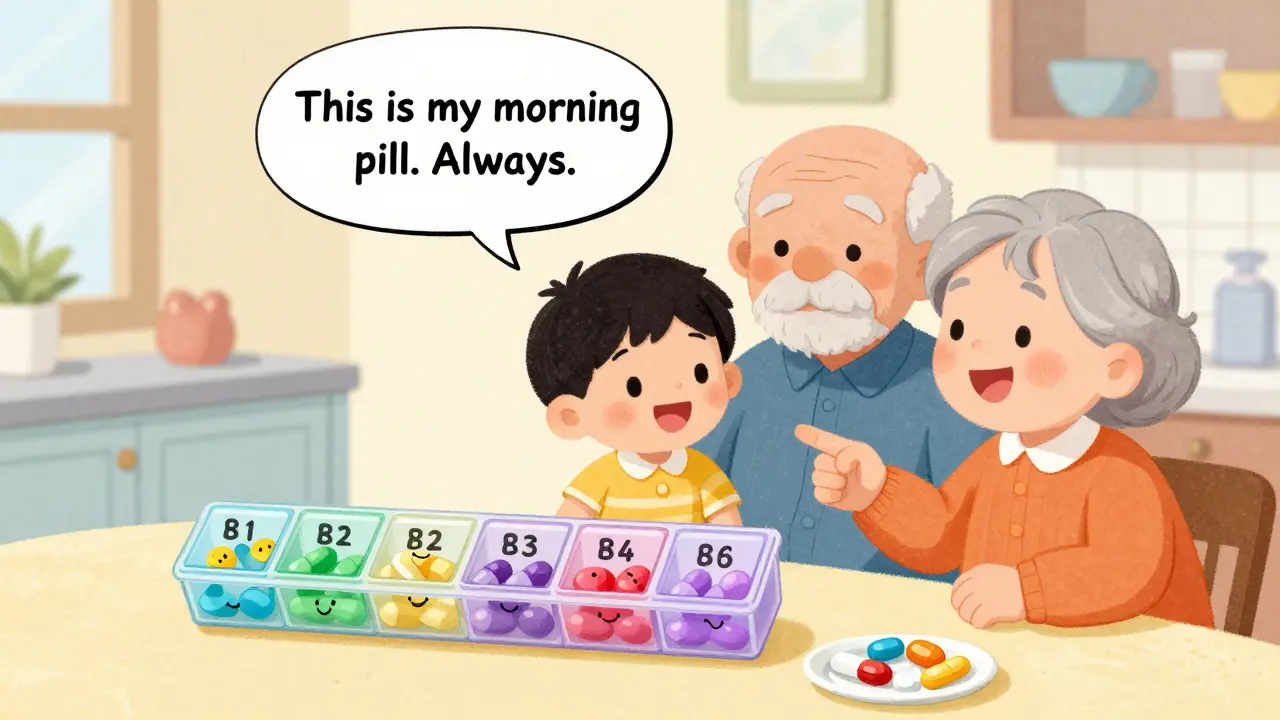
For elderly patients or those on multiple meds, pill confusion is real. A 2023 study found that 63% of patients who used a pill organizer after switching to generics stuck with their regimen. Why? It removes the guesswork. If the pill looks different, the organizer says: “This is your morning pill. Always.”
3. Ask for the Same Manufacturer
If you’re on a critical drug like warfarin or levothyroxine, ask your pharmacist: “Can I get the same manufacturer as last time?” It’s a simple request. And it reduces variability. One 2023 study showed this alone cut adherence drops by nearly half.
4. Leverage Technology
Electronic prescribing systems are now smart enough to flag brand-to-generic switches. Surescripts found that when pharmacists received an alert and followed up, adherence improved by 22.4%. AI tools like AiCure, which use smartphone cameras to verify patients are taking their pills, boosted adherence by 37% during transitions.
5. Synchronize Refills
When all your prescriptions are due on the same day, you’re less likely to forget. A 2022 study showed medication synchronization programs improved generic adherence by 18.3%. It’s not rocket science-it’s routine.
The Hidden Cost of Poor Adherence
Generics save money-on average, 80-85% less than brand-name drugs. But if patients stop taking them, the savings vanish. Non-adherence costs the U.S. healthcare system $528 billion a year. That’s more than diabetes, heart disease, and cancer combined.
And it’s not just about ER visits. Missed doses lead to worsening conditions. A diabetic who skips insulin ends up in the hospital. A hypertensive patient who stops their pill risks a stroke. The cheaper drug becomes the costlier mistake.
What’s Changing in 2025 and Beyond
The FDA is rolling out new rules. Starting January 1, 2025, generic manufacturers must include transition-specific education materials with every box. That means clearer labels, plain-language explanations, and visual guides on what to expect.
Also, the Generic Pharmaceutical Association’s new “Seamless Switch” certification will push manufacturers to keep pill appearance consistent for high-risk drugs. No more sudden color changes for thyroid or seizure meds. That alone could cut confusion by 28%.
And with the Inflation Reduction Act capping out-of-pocket costs at $2,000 for Medicare patients, cost won’t be the main barrier anymore. The real challenge? Trust.
What Patients Can Do
If you’re switching to a generic:
- Don’t assume it’s weaker. Ask your pharmacist to explain the science.
- Use a pill organizer to track what you’re taking.
- If you feel different, don’t stop. Call your doctor. It might be a side effect-or a nocebo.
- Ask for the same manufacturer if it’s a critical medication.
- Keep your refill dates aligned. One day a month is easier than four.
Generics aren’t a compromise. They’re a smart, safe choice. But they need to be handled with care. Because in medicine, trust isn’t just nice to have-it’s part of the treatment.
Are generic drugs really as effective as brand-name drugs?
Yes. The FDA requires generics to have the same active ingredient, strength, dosage form, and route of administration as the brand-name drug. They must also meet strict bioequivalence standards, meaning they’re absorbed into the body at the same rate and to the same extent. A 2022 FDA report confirmed that 99% of generics meet these standards. The only differences are in inactive ingredients (like dyes or fillers) and pill appearance, which don’t affect how the drug works.
Why do some people feel worse after switching to a generic?
Often, it’s not the drug-it’s the perception. Studies show that when patients believe they’re taking a cheaper generic, they’re more likely to report side effects or feel like it’s not working. This is called the nocebo effect. In one study, identical placebo pills labeled as generics caused 22% more reported side effects than the same pills labeled as brand-name. For some, especially with neurological or chronic conditions, the change in pill color or shape can trigger anxiety that mimics side effects.
Which medications should I be cautious about when switching to generics?
Drugs with a narrow therapeutic index require extra caution. These include levothyroxine (for thyroid), warfarin (blood thinner), phenytoin and carbamazepine (for seizures), and lithium (for bipolar disorder). Small changes in how these drugs are absorbed can lead to serious health risks. If you’re on one of these, talk to your doctor about sticking with the same manufacturer after switching. Some pharmacists can help you request consistent formulations.
Can I ask my pharmacist to give me the same generic manufacturer every time?
Yes. While pharmacies often switch manufacturers to save money, you have the right to request the same one. This is especially important for critical medications. A 2023 Kaiser Permanente study found that patients who consistently used the same manufacturer had 47% better adherence. Simply say: “I’d like to stay on the same generic manufacturer as before.” Most pharmacies will honor the request.
Does insurance cover generics differently than brand-name drugs?
Yes-and that’s often why switches happen. Insurers typically require patients to try generics first because they’re cheaper. Copays for generics are usually $5-$15, while brand-name versions can cost $50-$100 or more. For Medicare Part D beneficiaries, the Inflation Reduction Act now caps out-of-pocket costs at $2,000 a year, which reduces cost-related non-adherence. But even with lower copays, perception issues remain a bigger barrier than price.
How can I tell if my generic isn’t working?
If you notice a change in symptoms-like increased blood pressure, worsening seizures, or new side effects-don’t assume it’s the generic. Contact your provider. For some drugs, like thyroid or blood thinners, your doctor can order a blood test to check if your levels are still in range. For others, like antidepressants, it may be psychological. Either way, don’t stop taking the medication without talking to someone. A quick call can prevent a bigger problem.
yo i switched my blood pressure med to generic last year and at first i thought i was gonna die lol. felt like my head was in a fog. called my pharmacist and she just laughed and said 'dude, you think the blue pill is magic?' turned out i was just paranoid. now i use a pill organizer and it's smooth. generics are cool, stop being scared of them 😅
Let me guess-FDA is just another corporate puppet and the real reason generics 'fail' is because Big Pharma bribed them to make pills look different so you’d panic and buy the brand again. I’ve seen the documents. The 20% absorption variance? That’s not a loophole-it’s a backdoor for poison. They don’t want you healthy. They want you dependent. And now they’re pushing 'transition education' like it’s a miracle cure. Wake up.
Really fascinating breakdown. The nocebo effect here is clinically significant-almost surgical in its precision. When you layer in cognitive bias + pill aesthetics + chronic disease anxiety, you get a perfect storm of non-adherence. What’s wild is that for statins, the cost reduction overrides all that noise. But for antidepressants? The brain’s got too much emotional baggage tied to the pill’s shape. It’s not pharmacology-it’s neuroanthropology. We need more studies on pill psychology as a clinical variable.
Thank you for writing this with such care. I’ve worked in community pharmacy for 18 years, and I’ve seen too many elderly patients stop their meds because the new pill didn’t 'feel right.' One woman cried because her 'anxiety pill' went from round to oval. We started using color-coded pill boxes, and adherence jumped. It’s not rocket science-it’s human. A little patience, a little clarity, and a lot of listening goes further than any study.
Interesting how we treat medication like a sacred object-its shape, its color, its brand. It’s almost animistic. We assign identity to inert compounds. The body doesn’t care if it’s Teva or Mylan. But the mind? The mind remembers. And fear? Fear is a powerful pharmacokinetic modulator. I wonder if, in 50 years, we’ll look back at this era and laugh at how we anthropomorphized pills. Or cry.
So… we’re telling people to trust science… but also to ask for the same manufacturer because the science is too inconsistent to trust? Hmm. That’s like saying 'eat organic' but 'only if it’s from the same farm.' I mean… okay. I guess if you’re on warfarin, you’re basically a human lab rat. But for the rest of us? Just take the damn pill. And if you feel weird? Maybe it’s not the pill. Maybe it’s life. Just a thought.
From a clinical pharmacology standpoint, the bioequivalence framework is robust but oversimplified. The 90% CI for AUC and Cmax is fine for population-level outcomes, but for individuals with polymorphic CYP450 enzymes, even 15% variation can trigger subtherapeutic or toxic exposure. The real issue isn’t perception-it’s precision. We need pharmacogenomic-guided switching protocols, not just 'ask for the same manufacturer.' This is where AI-driven dosing algorithms could revolutionize adherence. We’re still in the stone age of generic transitions.
Let me be clear: if you’re taking a generic for a critical medication and you’re not monitoring your labs, you’re not being responsible-you’re being reckless. This article reads like a PSA from a pharmaceutical marketing department. People need blood tests. Not pill organizers. Not 'same manufacturer' requests. Labs. Data. Numbers. If you’re feeling 'different,' you should be in a clinic, not scrolling Reddit.
THIS. So much this. 🙌 I’m a nurse and I’ve seen patients go from 'I’m never switching' to 'I wish I’d done it sooner' after a 5-minute chat + pill organizer. My favorite trick? Show them the FDA bioequivalence chart. They’re shocked it’s not magic. And yes-emoji time: 💊➡️✅ = trust built. Also, if you’re on warfarin? DO ask for the same maker. It’s not paranoia. It’s science. And if you’re on antidepressants? Don’t panic. Call your doc. You’re not broken. You’re just adjusting. You got this. ❤️