

Imagine walking into a pharmacy, picking up a bottle of pills, and realizing the dose is ten times higher than what your doctor mentioned. It sounds like a nightmare, but it happens more often than we think. In the U.S. alone, medication errors harm at least 1.5 million people every year. While we usually trust our doctors implicitly, the truth is that they are often under immense pressure. Some physicians average just 17 seconds per prescription in busy clinics, and that kind of rush is where mistakes live.
The good news is that you aren't just a passive recipient of healthcare; you're the final safety check in the chain. When you actively verify your medications, you can reduce the risk of errors by up to 50%. Understanding how prescription writing errors is a preventable medical mistake occurring during the creation of medication orders by healthcare providers happen allows you to spot the red flags before they reach your medicine cabinet.
Why Prescription Errors Happen
Mistakes don't usually happen because a doctor doesn't know their medicine; they happen because of systemic failures. For years, the biggest culprit was illegible handwriting. Even today, about 42% of handwritten prescriptions require a pharmacist to call the doctor for clarification. But as we've moved toward Electronic Health Records (EHR), a new set of problems has emerged.
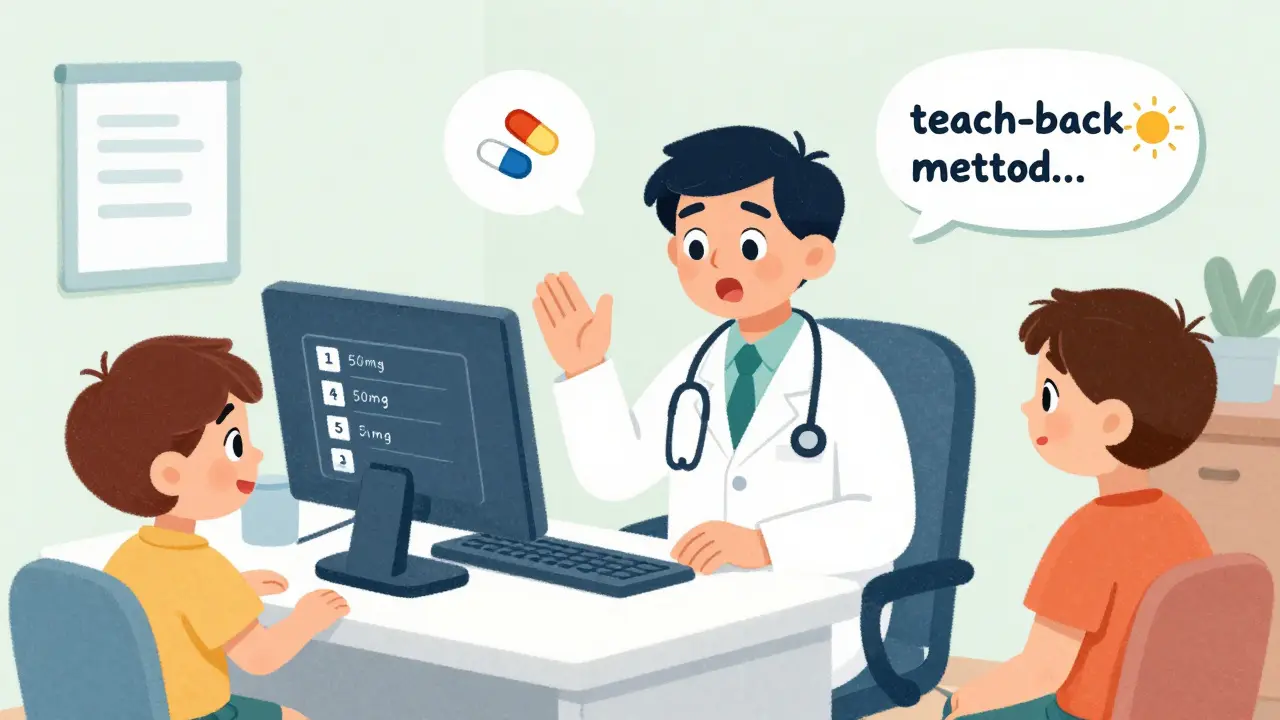
Digital systems have cut handwriting errors by over half, but they've introduced "click errors." Have you ever used a dropdown menu on a website and accidentally selected the option right next to the one you wanted? That's exactly what happens in a clinic. A doctor might intend to prescribe 5 mg of a drug, but because 50 mg is right next to it in the list, they click the wrong one. This is why the ECRI Institute identifies these digital workarounds as a top health technology hazard.
Common Red Flags to Watch For
Most errors fall into a few predictable patterns. If you see these on your script or label, stop and ask questions immediately. One of the most dangerous issues involves "look-alike, sound-alike" drugs. For example, Celebrex and Celexa sound nearly identical but treat completely different conditions. If you're treating arthritis and see a drug for depression on your label, that's a massive red flag.
Then there are the "invisible" errors-the decimals and abbreviations. A missing zero can be fatal. If a doctor writes ".5 mg" instead of "0.5 mg," a pharmacist might misread it as "5 mg." Similarly, a "trailing zero," like writing "5.0 mg," can be mistaken for "50 mg." The FDA has reported that these tiny punctuation mistakes caused 128 deaths over a ten-year period.
| Dangerous Abbreviation | Common Misinterpretation | The Safe Way to Write It |
|---|---|---|
| U | Read as '0' (10x dose error) | Units |
| QD | Confused with QID (4x daily) | Daily | MS or MSO4 | Confused with Magnesium Sulfate | Morphine Sulfate |
| Ug | Read as 'units' | Micrograms |
The Seven-Point Verification Checklist
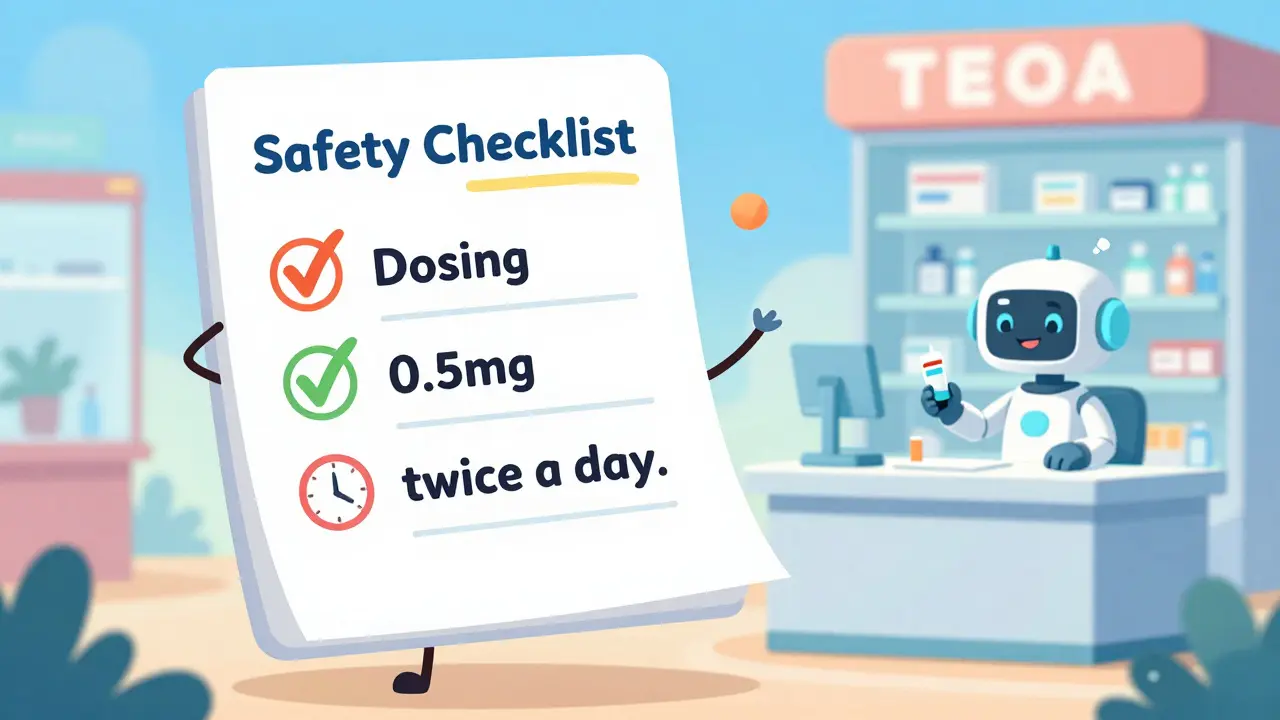
You don't need a medical degree to catch a mistake. The FDA recommends a simple visual check. Before you leave the doctor's office-or as soon as you get your medication at the pharmacy-run through these seven points:
- Full Drug Name: Is the name spelled out completely? Avoid abbreviations.
- Precise Dosage: Check for those leading zeros (0.5 mg) and ensure there are no trailing zeros (no 5.0 mg).
- Clear Frequency: Does it say "twice a day" or does it use confusing codes like "BID"?
- Total Quantity: Does the amount of pills match how long you're supposed to take them?
- The "Why": Is the purpose of the medication listed? (e.g., "for high blood pressure").
- Doctor's Info: Is there clear contact information for your provider?
- Expiration Date: Is the prescription still valid?
Using a checklist like this isn't just being "extra"; it's effective. A study from the University of Michigan found that patients using this exact method caught 63% of errors, compared to just 22% of people who didn't. It's the single most effective way to protect yourself.
How to Communicate With Your Provider
It can feel intimidating to tell a doctor they might have made a mistake. However, most providers actually appreciate it when a patient is engaged because it protects them from malpractice claims too. The key is using the "teach-back method." Instead of just nodding when the doctor tells you the dose, repeat it back in your own words: "So, I'm taking 5 milligrams of this pill once every morning, right?"
If you're still unsure, use the "Ask Me 3" approach promoted by the National Patient Safety Foundation. Ask these three specific questions:
- What is my main problem?
- What do I need to do (exactly)?
- Why is it important for me to do this?
By forcing the provider to explain the logic, you often uncover a mistake. For instance, if the doctor says the drug is for your heart, but the prescription is for a drug that treats anxiety, you've just caught a critical error.
Handling High-Alert Medications
Not all drugs are created equal. While a mistake with a vitamin is annoying, a mistake with a "high-alert medication" can be deadly. Insulin, Anticoagulants (blood thinners), and Opioids account for 72% of fatal prescription errors. If you are taking any of these, your level of vigilance needs to double.
For these drugs, don't just check the label-check the drug's intent. If you're on a blood thinner like Warfarin, verify that the dosage is tailored to your most recent blood test results. Because these drugs have a narrow therapeutic window, even a small change in dosage can lead to internal bleeding or a clot.
The Future of Error Prevention
We are moving toward a world where the patient is a formal part of the digital loop. New technologies are making it harder for errors to slip through. Some hospitals are piloting blockchain tracking to ensure the intent of the doctor matches exactly what the pharmacist dispenses. Others are using AI-powered apps that can scan a prescription and flag patterns that look like common errors.
By 2027, experts predict that patient-mediated error detection will be the standard. We're also seeing a shift toward "patient verification labels" that use pictograms instead of just text, which helps people who may struggle with complex medical language or have low health literacy.
What should I do if I find an error on my prescription?
Do not take the medication. First, notify the pharmacist immediately. They can often spot the error and contact the doctor for a correction. If you are at the doctor's office, ask them to rewrite the script and double-check the dosage against your chart before you leave.
Can electronic prescriptions still have errors?
Yes. While they eliminate messy handwriting, e-prescriptions are prone to "drop-down menu errors" where a provider accidentally selects the wrong dose or drug from a list. Always verify the drug name and dose on the final pharmacy label.
Which medications are the most dangerous if a writing error occurs?
High-alert medications like insulin, opioids, and anticoagulants (blood thinners) are the most dangerous. Because these drugs have potent effects on the body, a small dosing error can lead to life-threatening complications.
Why do doctors use abbreviations like QD or BID?
These are Latin shorthands (e.g., "quaque die" for daily) used for speed. However, they are frequently misread. You should insist that your prescriptions use clear, plain English like "once daily" or "twice a day."
How can I be sure the pharmacy didn't make the mistake?
Cross-reference the printed label against the instructions your doctor gave you verbally. If there is a discrepancy, ask the pharmacist to show you the original order from the doctor to see where the mismatch occurred.