

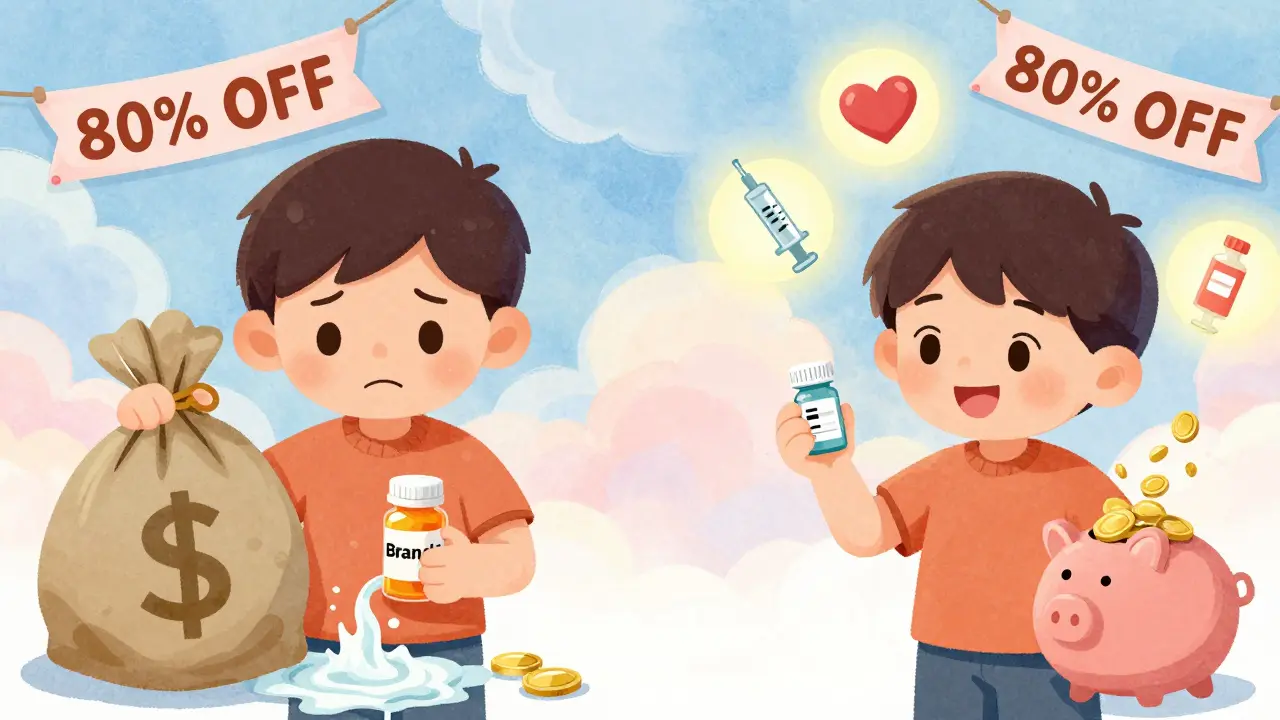
When a patient skips a dose because the copay is too high, it’s not just a personal choice-it’s a system failure. And it’s happening more often than most people realize. In the U.S., 32.7% of adults admit to skipping, cutting, or delaying their medications to save money. That’s more than one in three people. The reason? High out-of-pocket costs. But here’s the good news: when generic drug prices go down, adherence goes up-and so do health outcomes.
Why Cost Stops People From Taking Their Medicine
It’s simple math: if your monthly prescription costs $75 and you’re living paycheck to paycheck, you’re going to think twice. Maybe you’ll take every other pill. Maybe you’ll wait until the next pay cycle. Maybe you’ll skip it altogether. That’s cost-related nonadherence, and it’s a massive problem in American healthcare. Studies show that for every $10 increase in out-of-pocket cost, adherence drops by 2% to 4%. For drugs like GLP-1 agonists used to treat diabetes, each extra $10 in cost reduces the chance someone will stick with their treatment by nearly 4%. That might sound small, but it adds up fast. Non-adherence leads to 100,000+ preventable deaths every year and costs the system between $100 billion and $300 billion annually in avoidable hospital visits, ER trips, and complications. The biggest barrier isn’t the total price of the drug-it’s the copay. Insurance plans use tiered formularies to control costs, but they often put brand-name drugs on the highest tiers. A brand-name statin might cost $100 per month with a $75 copay. The generic version? Same active ingredient, same effectiveness, same FDA approval-but a $5 copay. That’s not a minor difference. It’s the difference between taking your medicine and not taking it at all.Generics Work Just as Well-And Cost 80% Less
A lot of people still think generics are “weaker” or “inferior.” That’s not true. The FDA requires generics to have the exact same active ingredient, strength, dosage form, and route of administration as the brand-name drug. They must also prove they’re absorbed into the body at the same rate and to the same extent-within 80% to 125% of the brand. That’s not a loophole. That’s science. And the savings? They’re staggering. Generic drugs cost 80% to 85% less than their brand-name equivalents. In 2023, generics made up 90% of all prescriptions filled in the U.S. But they accounted for only 23% of total drug spending. That’s $643 billion in savings between 2009 and 2019, according to the Association for Accessible Medicines. Real-world results back this up. In a 2012 study of Medicare Part D beneficiaries, researchers tracked patients switching from brand-name atorvastatin to generic rosuvastatin. After the drug moved from a higher-cost tier to the lowest tier, adherence jumped by 5.9%. That’s not a rounding error. That’s thousands of people avoiding heart attacks, strokes, and hospitalizations because they could finally afford their meds. Another study looked at women taking aromatase inhibitors after breast cancer treatment. Those on brand-name drugs had a 22.3% discontinuation rate. Those on generics? Only 17.8%. Adherence rates were 73.1% for generics versus 68.4% for brands. The only difference? Price.What Happens When People Can’t Afford Their Meds
Skipping pills doesn’t just hurt the individual. It ripples through the entire system. When someone with high blood pressure stops taking their meds, their risk of stroke goes up. When a diabetic stops taking insulin, they end up in the ER. When someone with depression stops their antidepressant, their symptoms worsen-and they’re more likely to lose their job or become a burden on family members. The numbers are brutal:- Up to 50% of treatment failures are due to non-adherence.
- Non-adherent patients have 15% to 20% more hospitalizations than those who take their meds as prescribed.
- Patients who skip doses because of cost are 5.2% more likely to visit the emergency room.
How Policy Changes Are Making a Difference
The system isn’t perfect, but it’s getting better. The Inflation Reduction Act of 2022 capped insulin costs at $35 per month for Medicare beneficiaries. That’s a game-changer. Before that, some people were rationing insulin-cutting doses, stretching vials, skipping days. Now, that’s illegal under Medicare rules. Starting in 2025, Medicare Part D will also cap total out-of-pocket drug spending at $2,000 per year. That’s huge. Right now, people with chronic conditions can face catastrophic costs after hitting their coverage gap. The new cap will protect 1.4 million beneficiaries from being priced out of their meds. Even better, real-time benefit tools (RTBTs) are now built into many electronic health records. When a doctor prescribes a drug, the system shows the patient’s actual out-of-pocket cost-before they even leave the office. In pilot programs, this has boosted adherence by 12% to 15%. It’s not magic. It’s transparency. When patients know what they’ll pay, they’re more likely to say yes.What’s Still Broken-and What Can Be Fixed
Despite progress, problems remain. Many patients still don’t trust generics. They think “cheap” means “less effective.” The FDA’s “It’s Okay to Use Generics” campaign helps, but it’s not enough. Doctors need to talk about cost during visits-not just as an afterthought, but as a core part of treatment planning. Insurance formularies are still confusing. A drug might be covered on Tier 1 at CVS but Tier 3 at Walgreens. Patients don’t know that. Tools like GoodRx help, but they’re not integrated into the medical workflow. Pharmacies, insurers, and EHR systems need to talk to each other better. Therapeutic duplication is another hidden cost. Sometimes, a patient gets two different drugs for the same condition-because their doctor didn’t check what else they were taking. Medication therapy management programs, where pharmacists review all a patient’s meds, can cut that waste by 20% to 30%. And while generics are cheaper, brand-name drugs still dominate in some areas. Why? Marketing. Sales reps. Habit. But when a doctor prescribes a brand-name drug without checking if a generic exists, they’re not just choosing a pill-they’re choosing whether a patient can afford to live.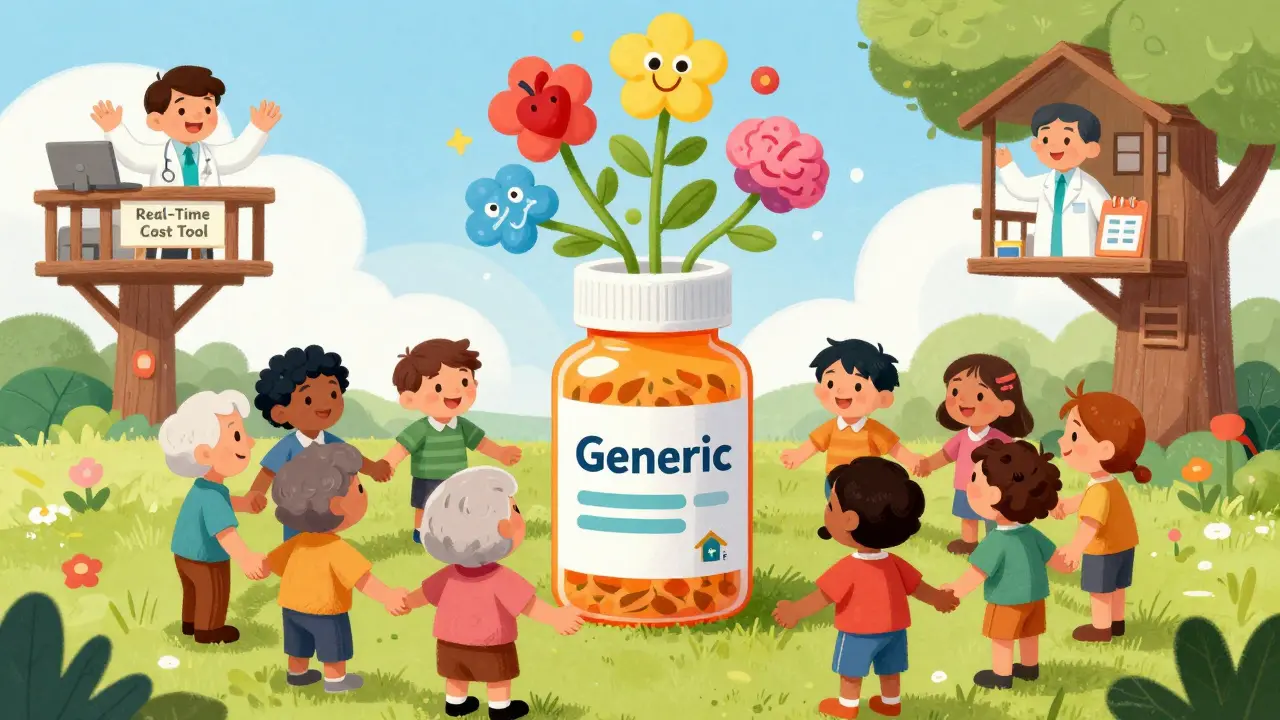
What You Can Do-Whether You’re a Patient or a Provider
If you’re a patient:- Ask if there’s a generic version of your drug.
- Use GoodRx or SingleCare to compare prices at nearby pharmacies.
- Ask your doctor about copay assistance programs or patient assistance programs from drug manufacturers.
- If your copay is too high, say so. Your doctor can’t help if they don’t know.
- Check your EHR’s real-time benefit tool before prescribing.
- Don’t assume patients know generics are safe. Explain it plainly: “This generic works the same way and costs less.”
- Prescribe generics unless there’s a clear medical reason not to.
- Know your formulary tiers. If your patient is on Tier 3, ask: “Can we move them to Tier 1?”
The Bigger Picture: Health Is a Right, Not a Reward
Americans pay 256% more for brand-name drugs than people in other wealthy countries. That’s not because our drugs are better. It’s because our system lets drugmakers set prices without limits. Generics are the closest thing we have to a fix. Lower prices don’t just save money. They save lives. When someone can afford their meds, they stay out of the hospital. They keep working. They take care of their kids. They live longer. The data is clear. The solutions exist. What’s missing is the will to make cost a priority in every prescription.Are generic drugs really as effective as brand-name drugs?
Yes. The FDA requires generics to have the same active ingredient, strength, dosage form, and route of administration as the brand-name drug. They must also prove they’re absorbed into the body at the same rate and to the same extent-within 80% to 125% of the brand. Thousands of studies confirm they work just as well. The only difference is the price.
Why do some patients still prefer brand-name drugs?
Some patients believe brand-name drugs are stronger or more reliable, often due to marketing or past experiences. Others have had bad reactions to a specific generic manufacturer’s version and assume all generics are the same. But generics are made to the same standards. If a patient has a reaction, it’s likely due to inactive ingredients-not the active drug. Switching to a different generic brand often fixes the issue.
How much can I save by switching to a generic?
On average, you’ll save 80% to 85%. For example, a brand-name statin might cost $100 a month with a $75 copay. The generic version often costs $5 to $10. That’s $900 a year saved. For people on multiple medications, the savings can be thousands.
Does insurance always cover generics at the lowest cost?
Not always. Insurance plans have tiered formularies, and some still put generics on higher tiers if they’re newer or if the manufacturer has deals with the insurer. Always check your plan’s formulary or use a tool like GoodRx to compare prices across pharmacies. Sometimes, paying cash is cheaper than using insurance.
What’s being done to make generics more accessible?
The FDA’s GDUFA III program is investing $1.1 billion to speed up generic approvals, with over 1,500 new generics expected by 2027. Medicare’s new $2,000 out-of-pocket cap for drugs in 2025 will help millions. Real-time cost tools in doctor’s offices are also expanding, helping prescribers choose affordable options before writing the script.
Can switching to generics cause side effects?
Rarely. The active ingredient is identical. But inactive ingredients-like fillers or dyes-can vary between brands. Some people are sensitive to those. If you notice new side effects after switching, talk to your pharmacist. They can help you find a different generic manufacturer or suggest alternatives.
Is it true that generic drugs are made in worse factories?
No. The same FDA inspections apply to both brand-name and generic manufacturers. Many brand-name companies even make their own generics. The FDA doesn’t allow lower standards for generics. In fact, about half of all generic drugs are made by the same companies that make the brand-name versions.
Let’s be real-this whole generic drug thing is just Big Pharma’s way of keeping us hooked on their overpriced junk. You think they care about your health? Nah. They just want you to keep buying the same damn pills under a different label. And don’t get me started on how the FDA lets them get away with this. It’s all a scam.
Generics work. I take them. My blood pressure is stable. No drama.
The data here is unequivocal: cost-related nonadherence is a systemic crisis, and generic substitution is one of the most evidence-based, low-hanging-fruit interventions we have. The 80-85% cost reduction isn’t a marketing claim-it’s a statistical reality validated by CMS, FDA, and peer-reviewed pharmacoeconomic studies across decades. When adherence increases by 5-6% due to tier reclassification, it translates directly to reduced hospitalizations, fewer ER visits, and improved long-term outcomes. This isn’t theoretical. It’s clinical practice.
So… generics are basically the same but cheaper? 😮 I always thought they were like knockoff sneakers. Guess I was wrong. Thanks for the clarity. 🙏
Wait, so you’re telling me I’m not supposed to be paranoid about my meds? That I’m not being gaslit by the system? I don’t know what to believe anymore…
Generics? LOL. I’ve seen the factory videos. They’re made in the same buildings as the brand names-same machines, same workers, same quality control. But here’s the real truth: the FDA lets them get away with it because they’re paid off by the big pharma lobbyists. You think your $5 pill is safe? Nah. It’s just cheaper poison with a different name. 🤡
If you’re struggling to afford your meds, please reach out. There are programs. There are people who want to help. You are not alone. Your health matters. Keep going.
Okay so let me get this straight-you’re telling me I can just swap my $80 brand-name Zoloft for a $5 generic and it’s gonna work the SAME? Like, no side effects? No weird vibes? No soul-crushing existential dread? Bro. I’ve been on this for 12 years. I don’t trust this. I’ve seen too much. This is like swapping your Tesla for a lawn mower and expecting it to fly. 🤯
Look, I get it-people want cheap meds. But here’s what nobody’s talking about: when you switch to a generic, you’re not just changing the label. You’re changing the manufacturer. And not all manufacturers are created equal. Some use fillers that trigger allergies. Some have inconsistent dissolution rates. The FDA’s 80-125% bioequivalence window? That’s a 45% variance. That’s not ‘the same.’ That’s a gamble. And if you’re on a narrow-therapeutic-index drug-like warfarin or levothyroxine-that gap can kill you. So don’t just assume it’s safe. Ask your pharmacist. Check the lot number. Track your labs. This isn’t about cost. It’s about control.
I switched from brand to generic lisinopril last year. My BP’s been perfect. Saved $800 a year. No side effects. Honestly? It’s like the drug company just changed the box.
They’re lying. The FDA is in bed with the drug companies. You think they’d let cheap generics survive if they were truly equal? Wake up.
Pharmacoeconomic analyses consistently demonstrate that the cost-per-QALY (quality-adjusted life year) for generic substitution is significantly below the willingness-to-pay threshold in the U.S. healthcare system, making it a dominant strategy in cost-effectiveness modeling. The marginal utility of brand-name drugs, absent therapeutic equivalence failure, is statistically negligible.
As a pharmacist, I see this every day. Patients who were skipping doses because of cost? They cry when they realize they can afford their meds again. One woman told me, ‘I didn’t realize I could breathe again.’ That’s not just a savings. That’s a life. Always ask: ‘Is there a generic?’ And if they say no-dig deeper. There’s always a way.