

When your fingers start refusing to straighten, even after trying to stretch them, it’s not just stiffness-it could be Dupuytren’s contracture. This isn’t a rare quirk. In the U.S. alone, over 17 million people have this condition, and if you’re over 65 with Northern European roots, your chances jump to nearly 1 in 3. It starts quietly: a small lump in your palm, maybe a dimple in the skin. But over time, it pulls your ring or pinky finger down, making it impossible to lay your hand flat on a table. You can’t shake hands. You can’t fit your hand in your pocket. You stop playing guitar, typing, or even washing your face without pain. This isn’t just about appearance-it’s about losing function in your hand, slowly and permanently.
What Exactly Is Dupuytren’s Contracture?
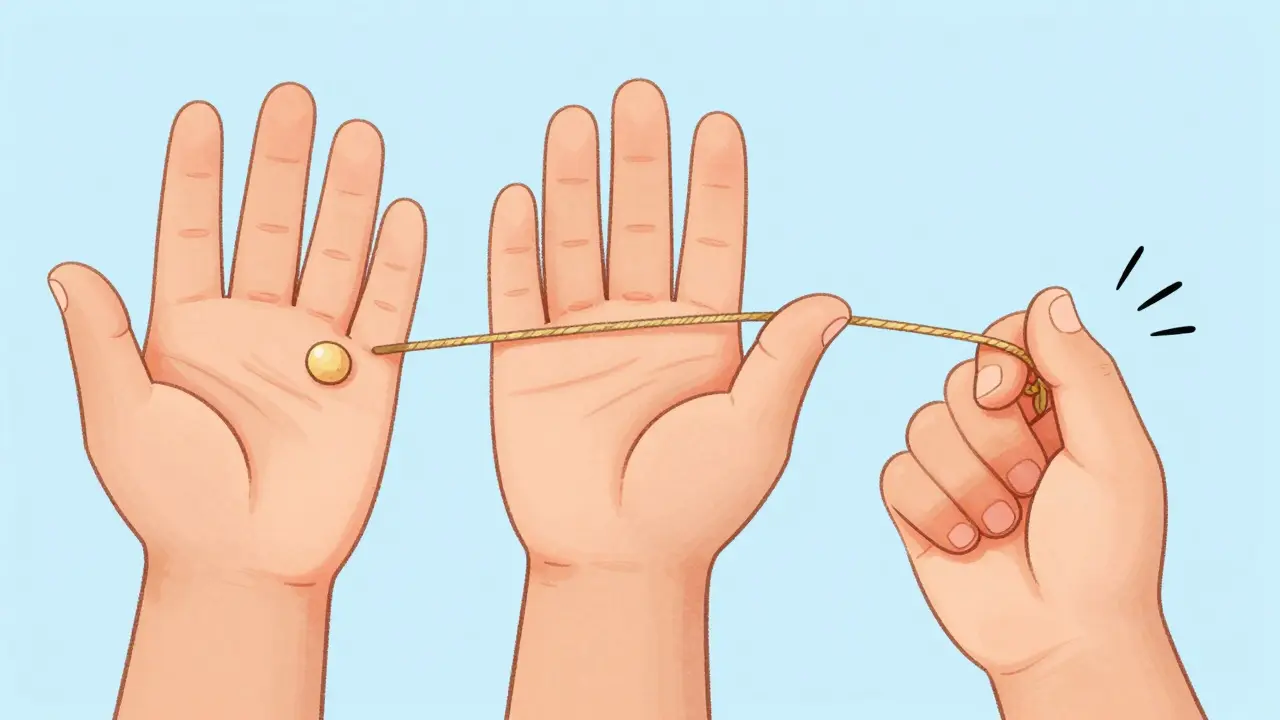
Dupuytren’s contracture is a thickening of the palmar fascia, the fibrous layer under your skin that runs from your palm into your fingers. In healthy hands, this tissue holds everything in place. In Dupuytren’s, it turns into hard, rope-like cords made of excess collagen and myofibroblasts-cells that act like tiny muscles, pulling and tightening over time. These cords can generate over 10 Newtons of force, enough to bend your finger with relentless pressure.
The condition progresses in stages. Stage 1: painless nodules form near the base of the ring or little finger. Stage 2: cords begin to stretch from the palm toward the fingers. Stage 3: you notice your finger can’t fully extend-usually around 10 to 30 degrees of bend. Stage 4: the finger is locked at 45 degrees or more, and daily tasks become nearly impossible. The International Dupuytren Society defines clinical intervention as necessary when contracture exceeds 20 degrees at the proximal interphalangeal joint or 30 degrees at the metacarpophalangeal joint. Many people don’t realize they’re in Stage 3 until they try to put their hand flat on a surface-the table top test-and fail. That’s when most finally seek help.
Why Does This Happen? Genetics, Age, and Risk Factors
It’s not caused by overuse or injury. You didn’t do anything wrong. Dupuytren’s is mostly genetic. If you have a first-degree relative with it, your lifetime risk jumps to 68%. Genome studies have pinpointed 11 specific gene locations linked to the disease, especially on chromosomes 16 and 20. It’s common in people of Scandinavian, Celtic, or Northern European descent. Men are five times more likely to develop it than women, and onset typically happens after age 50.
Other risk factors include diabetes, epilepsy (especially if treated with long-term phenytoin), smoking, and heavy alcohol use. But even without any of these, if your family history includes it, you’re at high risk. About half of all cases affect both hands, though one hand is almost always worse. That asymmetry makes it harder to notice early on-you might think your left hand is just stiff, not realizing your right hand is also changing.
How It Affects Daily Life: More Than Just a Bent Finger
A 2023 survey of over 1,200 patients showed that 89% struggled with gripping objects. Grip strength dropped by an average of 35%. That doesn’t just mean you can’t open jars. It means you can’t hold a coffee cup steady. You can’t carry groceries. You can’t hold your grandchild’s hand.
Seventy-six percent reported trouble with personal hygiene-washing your hair, brushing your teeth, or using soap becomes awkward. Sixty-eight percent had trouble at work. Manual laborers, like carpenters or mechanics, were 3.2 times more likely to lose work capacity than office workers. One Reddit user, 'PalmProblem89', said he stopped shaking hands because he felt embarrassed. Another, 'GuitarGuy42', said he couldn’t play his guitar anymore until he had a needle aponeurotomy. These aren’t isolated stories-they’re common.
Even simple things like putting on gloves, using a phone, or reaching into a back pocket become challenges. The psychological toll is real. Many patients report anxiety, depression, and avoidance of social situations because they’re afraid others will notice or judge.
Treatment Options: What Works and What Doesn’t
There’s no cure. But there are several ways to restore function. The choice depends on how far the contracture has progressed, your age, your lifestyle, and your tolerance for risk and recovery time.
Needle Aponeurotomy: Quick Fix, High Recurrence
This is the most common minimally invasive option. A doctor uses a needle to break the cord under local anesthesia. It takes less than 15 minutes. You walk out with your finger straight. Recovery? A few days. Cost? $1,500 to $3,000. Success rate? 80-90% for early cases.
But here’s the catch: recurrence is high. Up to 50% of patients see the contracture return within three years. It’s not a permanent fix, but it’s a great option for people who need quick relief-like musicians, mechanics, or retirees who want to garden again. It’s not recommended if you have very thick cords or if you’ve had surgery before.
Collagenase Injection (Xiaflex): Chemical Breakdown
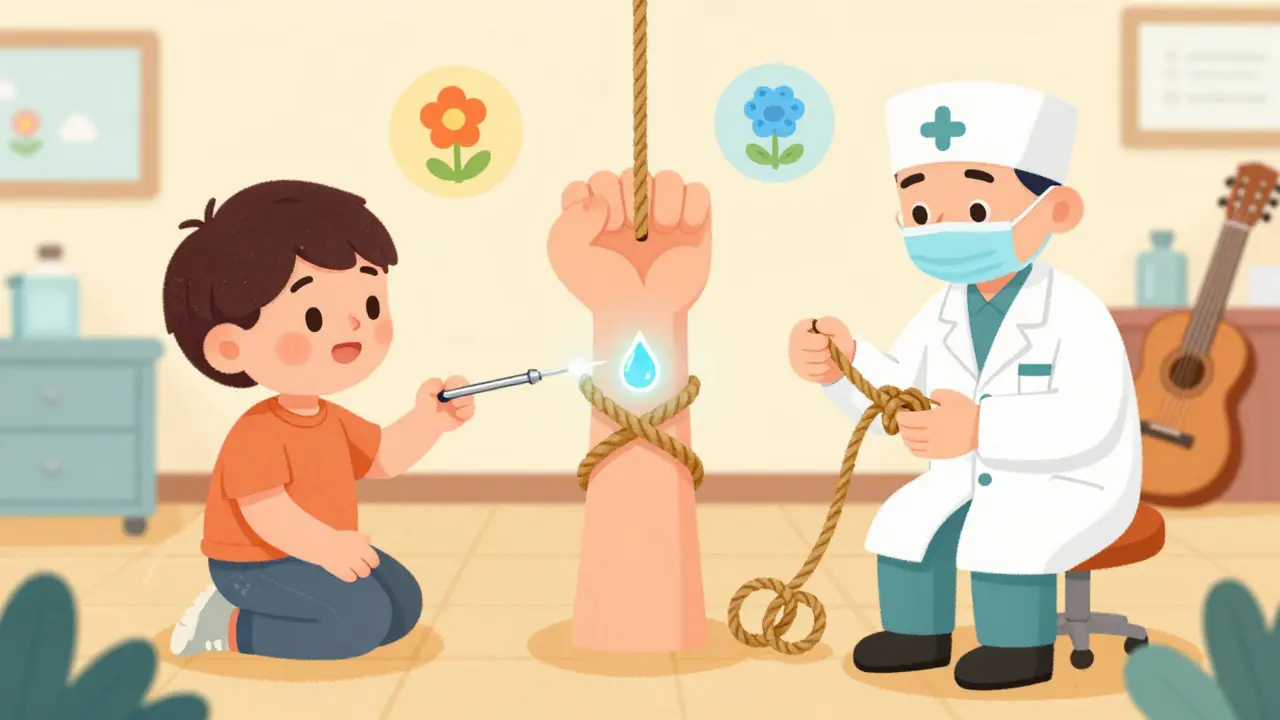
Approved by the FDA in 2013, Xiaflex is an enzyme that eats away at collagen. You get one or two injections directly into the cord. After 24 hours, your doctor manipulates your finger to break the cord. It’s not painless-many patients describe intense burning or cramping during the procedure. Success rate? 65-78% for metacarpophalangeal joints. Cost? $3,500 to $5,000 per treatment.
Adherence to post-injection stretching is critical. Patients who did their 5-10 minute stretches 4-6 times a day had an 85% success rate. Those who skipped it? Only 65%. It’s expensive, but it avoids surgery. It’s also the only option that doesn’t require cutting the skin. However, it doesn’t work well for proximal interphalangeal joint contractures, and it’s not recommended if you’ve had prior hand surgery.
Open Fasciectomy: The Gold Standard
This is traditional surgery. The surgeon removes the entire diseased fascia. It’s done under regional or general anesthesia. Recovery? 6 to 12 weeks. You’ll need physical therapy. Complications? 15-25% risk, including nerve damage (3-5% of cases), infection, or stiffness.
But here’s why it’s still widely used: 90-95% immediate correction. And recurrence? Only 20-30% at five years. It’s the best long-term option for severe cases, especially if you’re younger and want a lasting solution. A more aggressive version, dermofasciectomy, removes both the fascia and the overlying skin, then grafts new skin. That cuts recurrence to 10-15%, but recovery stretches to 3-6 months.
What Doesn’t Work
Stretching alone? No. Splints? Not proven. Dupuytren’s gloves? A 2023 survey of 1,542 Amazon reviews found 28% of users reported skin breakdown and no improvement after six months. Corticosteroid injections? They might ease pain in early nodules, but they don’t stop cord formation. The European Wound Management Association advises against them as a primary treatment.
Cost Comparison: What You’re Really Paying
| Treatment | Cost (USD) | Success Rate | Recurrence (5-Year) | Recovery Time | Cost per Degree Corrected |
|---|---|---|---|---|---|
| Needle Aponeurotomy | $1,500-$3,000 | 80-90% | 30-50% | 1-7 days | $75 |
| Collagenase (Xiaflex) | $3,500-$5,000 | 65-78% | 25-40% | 1-2 weeks | $120 |
| Open Fasciectomy | $8,000-$15,000 | 90-95% | 20-30% | 6-12 weeks | $90 |
| Dermofasciectomy | $10,000-$18,000 | 90-95% | 10-15% | 3-6 months | $110 |
Needle aponeurotomy is the cheapest per degree of correction. Fasciectomy is more expensive upfront but lasts longer. Xiaflex is the most expensive per degree corrected. Insurance usually covers all three, but prior authorization is often needed for collagenase.
What Experts Are Saying: The Debate Over Early Intervention
Dr. Kevin Chung from Michigan Medicine says: wait until contracture hits 30 degrees. A 2022 study showed 40% of people with less than 30 degrees never progress to functional loss over 10 years. Why rush into treatment if you don’t have to?
But Dr. Scott Levin at Johns Hopkins argues for early genetic counseling. If you have a family history, knowing your risk lets you monitor closely and act before the hand is crippled.
Dr. Lawrence Garner warns against a "treatment cascade"-where patients get multiple procedures over time without clear benefit. A 15-year study found no difference in hand function between those treated early and those who waited.
The consensus? Don’t panic. Don’t ignore it. Monitor. Use the table top test every few months. If your finger can’t extend past 30 degrees, talk to a hand specialist. There’s no rush-but there’s a window.
What’s Next? Emerging Treatments on the Horizon
Research is moving fast. A new FDA-cleared device called the Fasciotome, cleared in March 2023, uses ultrasound guidance to cut cords in under 12 minutes-half the time of traditional aponeurotomy. It’s already being used in select clinics.
Gene therapy is in early trials. A Phase I trial targeting the TGF-β1 gene (NCT04872151) showed a 40% reduction in cord thickness after six months. Adipose-derived stem cell therapy, tested at UPMC in 2023, cut recurrence by 55% at two years. These aren’t available yet, but they’re coming.
The market for Dupuytren’s treatments is growing. It’s a $450 million industry in the U.S. alone. With aging populations and better diagnostics, we’ll see more options-and more pressure to treat earlier.
What You Can Do Right Now
- Test your hand weekly: Can you lay your palm flat on a table? If not, you’re likely in Stage 2 or 3.
- Use a goniometer app like Hand Meter to measure your finger bend. It’s 95% accurate compared to clinical tools.
- Start gentle stretching: 5 minutes, 4 times a day. Don’t force it-just hold the stretch.
- Track your progression. Take photos of your palm monthly. Compare them.
- See a hand specialist if contracture exceeds 20 degrees. Don’t wait for pain.
- Ask about recurrence rates, not just success rates. Long-term outcomes matter more than immediate results.
There’s no magic pill. But there are real, effective ways to regain your hand’s function. The key is knowing when to act-and choosing the right tool for your life.
While the article presents a comprehensive overview, it fails to address the fundamental flaw in modern medical literature: conflating statistical prevalence with clinical necessity. Over 17 million cases in the U.S.? That's not an epidemic-it's a demographic artifact of aging Northern European populations. The real issue is overmedicalization. Many patients are being pushed into interventions they don't need, fueled by pharmaceutical marketing and surgeon incentives. The table top test is not a diagnostic tool-it's a heuristic. And yet, here we are, turning a benign fibromatosis into a crisis requiring $5,000 injections and surgical excisions. This is not medicine. This is commodification.
Thank you for this meticulously detailed breakdown. I appreciate the inclusion of recurrence rates and cost-per-degree metrics-these are rarely discussed in lay summaries. In Nigeria, access to even needle aponeurotomy is limited, and most patients present at Stage 4. The psychological toll described is accurate: many avoid social interaction entirely. We need more culturally adapted outreach: community health workers using visual aids, not just handouts. Also, note that collagenase is not FDA-approved outside the U.S.-this affects global equity in care. Let’s not forget that.
I love how you framed this-not as a disease, but as a quiet thief of daily life. The part about not being able to hold your grandchild’s hand? That hit me. My aunt had it. She stopped hugging because she was ashamed. I wish more doctors talked about the emotional weight, not just the contracture angle. It’s not just about bending fingers. It’s about bending your spirit.
The data presented is commendable, particularly the distinction between metacarpophalangeal and proximal interphalangeal joint thresholds. However, I must emphasize that the economic disparity in treatment access remains a critical oversight. While needle aponeurotomy may cost $1,500 in the United States, in India, the same procedure, when available, often exceeds $500 due to importation of instruments and lack of insurance coverage. Furthermore, the suggestion to use goniometer apps assumes smartphone ownership and digital literacy-conditions not universally present. A holistic approach must include low-cost, low-tech monitoring tools for global populations.
Let’s cut through the fluff. This isn’t a medical condition-it’s a genetic failure. You’re telling me 1 in 3 Northern Europeans over 65 develop this? That’s not a disease. That’s a population-level defect. And now we’re spending billions to fix it? Why not screen early? Why not discourage reproduction in high-risk families? We’re treating symptoms while ignoring the root cause: bad genes. This isn’t compassion-it’s biological triage. If you’re genetically predisposed to lose hand function, maybe you shouldn’t be playing guitar or shaking hands. Adapt.
What struck me most was how many people said they stopped shaking hands. I’ve never thought about that-but now I can’t unsee it. I wonder how many people are silently suffering because they’re too embarrassed to ask. Maybe we need a public awareness campaign-not with medical jargon, but with real stories. Like, ‘This is what my hand looks like when I try to hold my coffee.’ Simple. Human. No panic. Just truth.
Oh my goodness, this article was so thorough and thoughtful-I’m literally sitting here with tears in my eyes because I didn’t realize how many people go through this silently. I had a cousin who developed this after her husband passed away-she said she didn’t even notice until she tried to hug her daughter and couldn’t close her hand. And then there’s the cost comparison table! I printed it out and showed my doctor, and she was shocked we didn’t have this in our patient packets. I’m sharing this with every support group I know. Please, please, more of this. We need to normalize talking about hand health the way we do about heart health. And yes, stretching-yes, stretching-5 minutes four times a day, even if it feels silly. I’ve been doing it for six months and my pinky is 15 degrees better. It’s not magic-but it’s something.
Just want to clarify one thing: the claim that stretching alone doesn’t work is misleading. It doesn’t reverse contracture-but it delays progression. A 2021 study in the Journal of Hand Therapy showed that consistent, gentle stretching reduced progression by 40% in Stage 1-2 patients over 18 months. It’s not a cure. But it’s a buffer. And for someone with a family history? That buffer might mean the difference between surgery and not. Don’t dismiss it because it’s not flashy.